Categories
Uncategorized

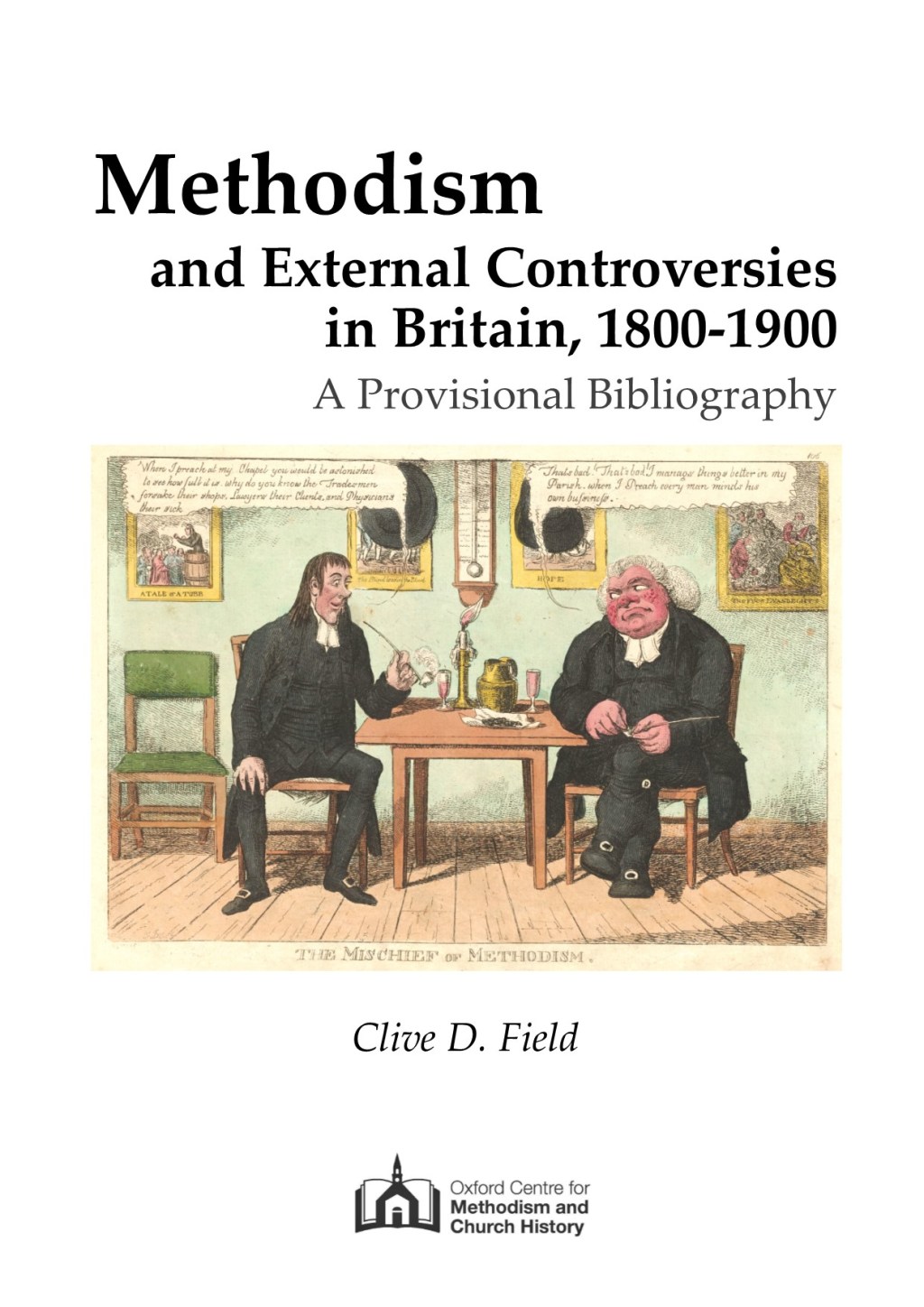
Publication – Methodism and External Controversies in Britain, 1800-1900: A Provisional Bibliography

The Centre is delighted to announce the publication of Methodism and External Controversies in Britain, 1800-1900: A Provisional Biography by Clive D. Field.

Like most new religious movements, Methodism encountered opposition and found itself embroiled in literary controversies with its critics from the outset. The hundreds of anti-Methodist publications issued during the eighteenth century, and Methodist responses thereto, have already been extensively investigated by scholars. Less well-known, however, are the external controversies in which British and Irish Methodism was engaged during the nineteenth century, especially in its first half, and the publications to which they gave rise.

In this work, Clive D. Field offers the first modern (albeit still provisional) bibliography of that literature, comprising 862 books, book chapters, and pamphlets for 1800–1900 in which Methodists either responded to literary attacks from Anglicans, Catholics, Nonconformists, and Freethinkers or initiated attacks on them, for reasons of doctrine, polity, or on other grounds. Many of these disputes were local, rather than national, in nature. The bibliography, preceded by a substantial introduction, is fully annotated, including edition histories and brief biographies of authors and subjects, and fully indexed, by author, date, short title, and place of imprint. The volume will be essential reading for anyone researching Methodist relations with other Churches in this period.

Clive D. Field is Honorary Senior Research Fellow in the School of History and Cultures, University of Birmingham and a former Director of Scholarship and Collections at the British Library. He has researched and published extensively in the social history of British religion from the eighteenth century to the present, with particular reference to statistical sources and the history of Methodism. His most recent book (2022), also from the Oxford Centre for Methodism and Church History, is Methodism in Great Britain and Ireland: A Select Bibliography of Published Local Histories.

This book from OCMCH Publications is available in both paperback. Order your copy now by following this link.

Categories
Uncategorized

Publication – Heterodoxy & Antiquity: Joseph Bingham (1668-1723)

The Centre is delighted to announce the publication of Heterodoxy & Antiquity: joseph Bingham (1668-1723) by L. W. Barnard.

In the early eighteenth century Joseph Bingham (1668-1723) was a significant figure. Ejected from Oxford in 1695 for heterodox views on the Trinity, he was appointed to Church livings in Hampshire. With use of the Winchester Cathedral library, he wrote his Origines Ecclesiasticae which appeared from 1708. His son, Richard, went on to published his father’s collected works in ten volumes which were still in print in the nineteenth century. Bingham’s works engaged with numerous contemporary debates, including lay baptism, anti-Catholicism, the Union with Scotland, and European Protestantism. This is the first full-length study of Bingham and his works.

After service in the Second World War, Leslie William Barnard (1924-2016) graduated from St Catherine’s College, Oxford, in 1948 with a degree in Theology. He was ordained in the 1950s and served a number of parishes. He undertook a PhD in Patristic studies at Southampton University, and in 1968 was appointed as a lecturer at the University of Leeds. In retirement, Leslie wrote a series of three biographies of eighteenth century bishops who were, like himself, Patristic scholars: John Potter (1989), Thomas Secker (1998), and Thomas Herring (2005).

With a new introduction by William Gibson.

This book from OCMCH Publications is available in paperback. Order your copy now by following this link.

Categories
Uncategorized

Publication – Our Justice Journeys: Three Centuries of Striving for a Better World

The Centre is delighted to announce the publication of Our Justice Journeys: Three Centuries of Striving for a Better World edited by Thomas Dobson.

Methodist commitment to social justice predates the Church itself, and is often what draws members to the Connexion. Our Justice Journeys brings together papers from the 2022 Methodist Heritage conference celebrating the 250th anniversary of the birth of Hugh Bourne, alongside other essays touching on Methodist collections, histories, and work in the present day. Between them, they explore many different aspects and narratives of Methodist engagement with social justice, encompassing nearly three centuries of striving for a better world.

Contributors: Jonathan Hustler, Rachel Lampard, David Leese, Tim Macquiban, Elizabeth Morris, Mike Norman, Kate Rogers, Ruth Slatter, Allison Waterhouse, and Hannah Worthen.

This book from OCMCH Publications is available in paperback. Order your copy now by following this link.

Categories
Uncategorized

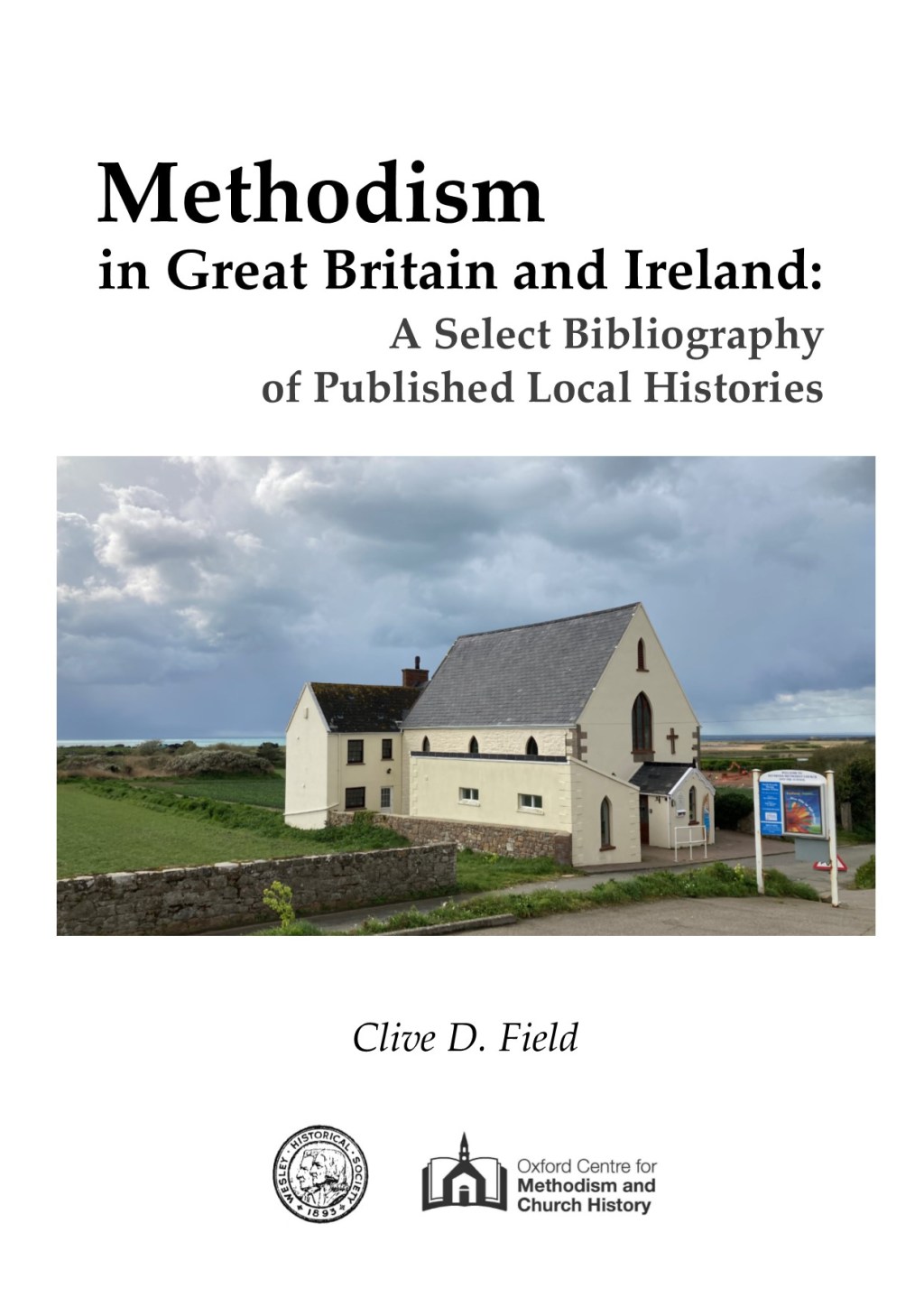
Publication – Methodism in Great Britain and Ireland: A Select Bibliography of Published Local Histories

The Centre is delighted to announce the publication of Methodism in Great Britain and Ireland: A Select Bibliography of Published Local Histories by Clive D. Field. This volume is a joint production with the Wesley Historical Society.

Methodism has been a dominant force in the religious landscape of Great Britain and Ireland since its emergence in the eighteenth century. Its development has been richly documented in terms of the careers and achievements of the Wesleys and other connexional leaders. Yet it was at the local level that the ‘lived experience’ (social as well as spiritual) of Methodism was most evidenced, through the members and adherents of individual societies and chapels and in Methodist schools and colleges.

This volume offers the first systematic bibliography of local histories of Methodism. It cannot be comprehensive (for, at its peak, there must have been at least 17,000 chapels and other preaching places in the British Isles) but it does list around 4,000 of the most important publications on local Methodism from the mid-nineteenth century to the present. They are arranged topographically, according to current civil administrative units, and with a cumulative index of place names.

This book from OCMCH Publications is available in both hardback and paperback. Order your copy now by following this link.

Categories
Uncategorized

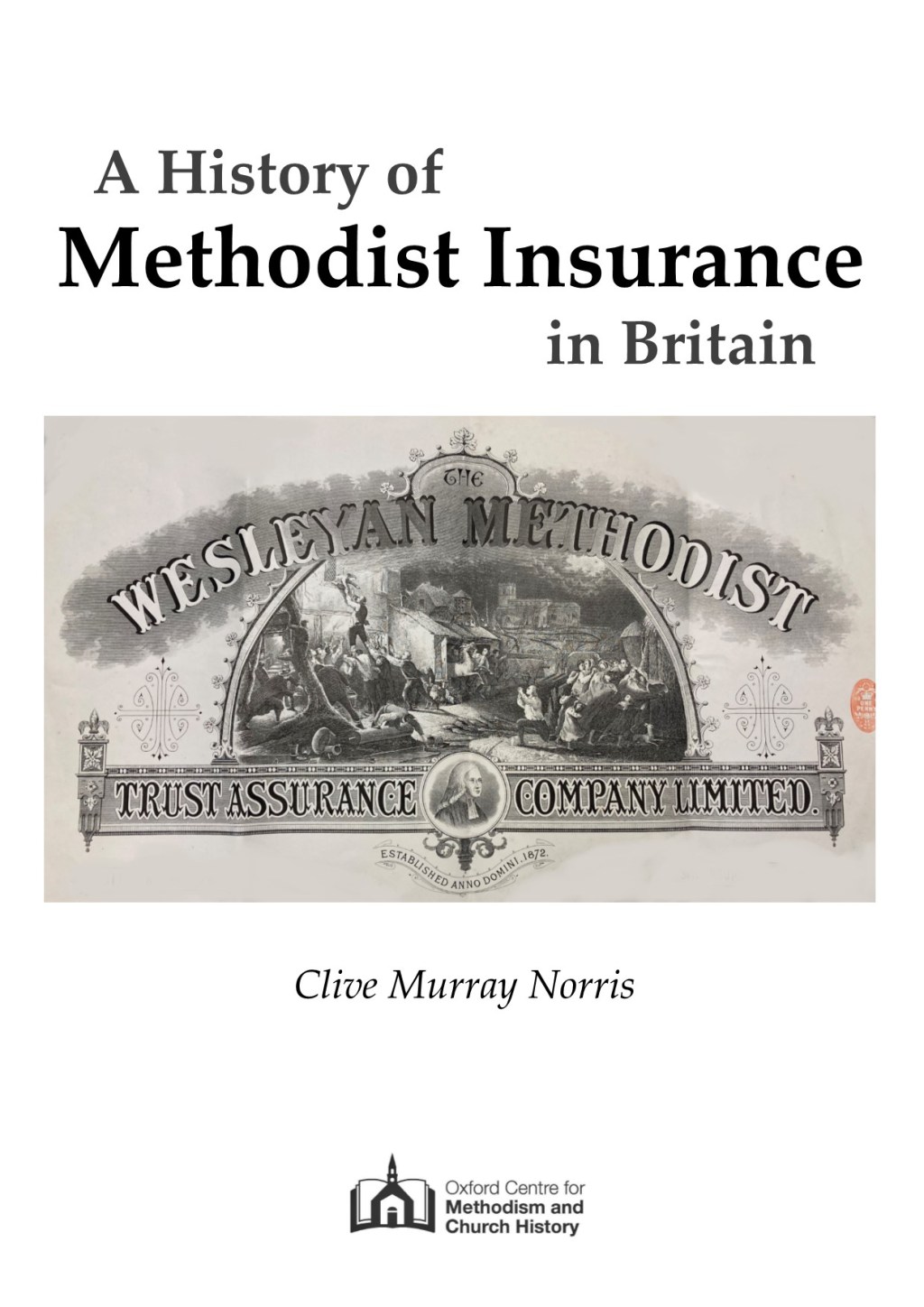
Publication – A History of Methodist Insurance in Britain by Clive Norris

The Centre is delighted to announce the publication of A History of Methodist Insurance in Britain by Clive Norris. The production of this book coincides with the one hundred and fiftieth anniversary of the foundation of the Methodist Insurance Company, and it tells the story of how Methodists acted, from the earliest days, to protect their chapels and other buildings from fire and other risks.

After several failed attempts in the first half of the nineteenth century, the various strands of British Methodism, including the Primitive Methodists (1866) and the Wesleyans (1872), established property insurance concerns, financed by leading lay members and managed jointly by businesspeople and clergy. These protected an expanding nationwide network of chapels and schools, and provided crucial underpinning for the movement’s mission of spreading the gospel and delivering educational, welfare and social services.

The narrative encompasses an era of wrenching social change, two World Wars, and a technological revolution, but the purpose, ethos and daily operation of today’s Methodist Insurance Company would look familiar to the pioneers of one and fifty years ago.

This book from OCMCH Publications is available in both hardback and paperback. Order your copy now by following this link.

Categories
Uncategorized

Publication – OCMCH Reprints

We are delighted to announce the launch of OCMCH Reprints, a new series of publications which draws on the the historical collections of the Oxford Centre for Methodism and Church History to provide high quality reproductions of out-of-copyright books that are scarce, inaccessible, or otherwise unavailable in digital formats elsewhere.

The series specialises in works of Methodist and Church history in Britain from the eighteenth to early twentieth centuries. All efforts are taken to present the text in a clean and readable format, and any imperfections that remain reflect the condition of the original book when digitised.

The first title to be made available through OCMCH Reprints is The Journal of the Housekeeper of Archbishop Secker, 1744-45.

Originally printed for private circulation in 1876, the volume was edited by Marianne Talbot to whom the original manuscripts had descended through Catherine Talbot, having been discovered among her papers. The unknown author was housekeeper to Thomas Secker (1693-1768) when he was Bishop of Oxford, and is written from the rectory of St. James, Westminster – where he was appointed in 1733.

Went to church. Heard an excellent sermon, preached by my good Lord from these words of Isaiah (Set thy house in order, for thou shalt dye, & not live: and Heziakiah turned his face to the wall, & prayed unto the Lord); from which he instructed us in our preparation for death in such perswasive terms, in a manner peculiar to himself, that must leave a deep impression upon our minds. His words are so enforcive, so powerful & excellent, who can help being moved & encouraged to our duty? He can never be sufficiently admired: every particular circumstance proves him all goodness. All expresions must fall short of what he deserves.

The Journal… p. 103

The journal richly describes the bustle of visitors, errands, and social engagements in an eighteenth-century clerical household – even when Secker was absent at Oxford and Cuddesden. Contemporary events mentioned include the deaths of Alexander Pope and Sarah, Duchess of Marlborough; the return to England of Commodore (later Admiral) George Anson from his circumnavigation of the globe; and even the short-lived ‘tar water’ craze set on foot by the popular book on the subject by Bishop George Berkeley of Cloyne.

‘The Journal of the Housekeeper of Archbishop Secker, 1744-45’ is available now to purchase in hardback, paperback, and as an eBook. Click here to order.

Categories
Uncategorized

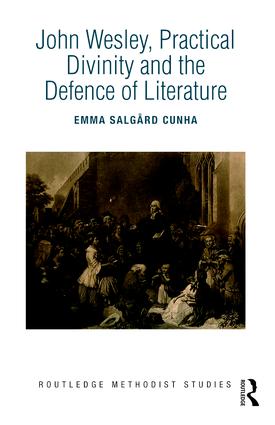
Research – John Wesley, Practical Divinity and the Defence of Literature, by Emma Salgård Cunha

9781138305021
John Wesley (1703-1791), leader of British Methodism, was one of the most prolific literary figures of the eighteenth century, responsible for creating and disseminating a massive corpus of religious literature and for instigating a sophisticated programme of reading, writing and publishing within his Methodist Societies. John Wesley, Practical Divinity and the Defence of Literature takes the influential genre of practical divinity as a framework for understanding Wesley’s role as an author, editor and critic of popular religious writing. It asks why he advocated the literary arts as a valid aspect of his evangelical theology, and how his Christian poetics impacted upon the religious experience of his followers.

Table of Contents

Methodism and the Defence of Literature: An Introduction

1 Methodist Literary Culture: Literacy and Grace

2 Wesley’s Christian Library: Practicality, Controversy and the Methodist Canon

3 Wesley in the Literary Sphere: The Methodist Miscellany

4 Wesleyan Poetics: Practical Divinity and the Function of Literature

5 Negotiating Nonconformity: Practical Divinity and the Politics of Methodist Hymnody

6 Experience, Experiment and Wesley’s Spiritual Autobiography

Conclusion

Emma Salgård Cunha is Lecturer in English at Middlebury College’s Oxford Humanities Program and College Lecturer in Theology at Keble College, Oxford. Her research focuses on the relationship between religion and literature in the long eighteenth century.

Categories
Uncategorized

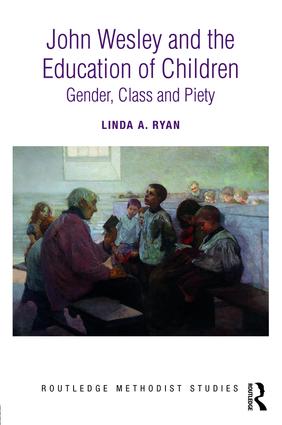
Research – New book on Wesley and Children’s Education by Linda A. Ryan

9781138092365

Scholars have historically associated John Wesley’s educational endeavours with the boarding school he established at Kingswood, near Bristol, in 1746, primarily because of the importance he himself placed on it. Nevertheless, his educational endeavors extended well beyond this single institution, since they were based not just on a desire for academic advancement, but were motivated by individualistic, familial and evangelical considerations. By examining all aspects of his work, this book sets out Wesley’s thinking and practice concerning child-rearing and education, particularly in relation to gender and class, in its broader eighteenth-century social and cultural context.

Drawing on writings from Churchmen, Dissenters, economists, philosophers and reformers as well as educationalists, this study demonstrates that the political, religious and ideological backdrop to Wesley’s work was neither static nor consistent. It also highlights Wesley’s eighteenth-century fellow Evangelicals including Lady Huntingdon, John Fletcher, Hannah More and Robert Raikes to demonstrate whether Wesley’s thinking and practice around schooling was in any way unique.

This study sheds light on the attitude of Wesley and his contemporaries to children, child-rearing, piety and education and demonstrates how Wesley’s attitude to education was influencing and influenced by the society in which he lived and worked. As such, it will not only be useful to academics with an interest in Methodism, but to those interested in broader aspects of eighteenth-century education and schooling, as well as those concerned with attitudes towards children, gender, class, and religiosity.

Dr Linda Ryan was a PhD student in the Oxford Centre for Methodism and Church History and is currently writing an article on teleology and Wesley’s views on childhood.

Categories
Uncategorized

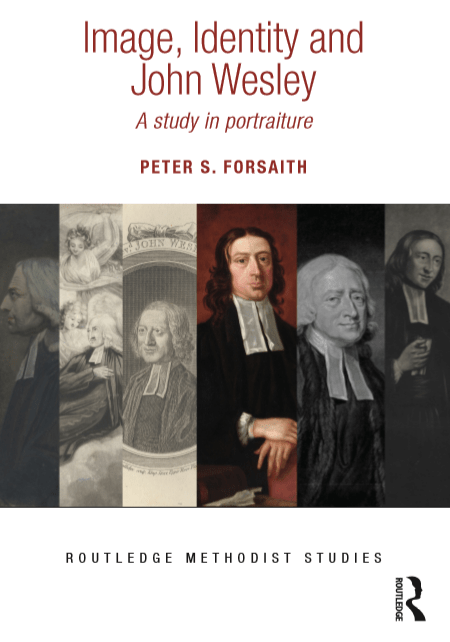
Research – Peter Forsaith on ‘Image, Identity, and John Wesley’

Image, Identity and John Wesley

‘A man in the dark in a picture frame/ So mystic and soulful’

Ultravox, Vienna

More than twenty-five years ago I complained about the state in which the historic pictures in the Museum of Methodism, London, were stored. Little could I have imagined that would eventually result in the kind of comprehensive and critical study of images of John Wesley, which has just been published. What happened was that I was asked to do something about the situation, and the first task was to list what was there. For every portrait of some past worthy there seemed to be yet another of John Wesley, and they all seemed slightly different. My inborn curiosity led me to try to get to the bottom of this; I have ended up researching the area in a way possibly no-one ever has.

The kinds of questions I wanted to ask were – what did artists painting Wesley make of him? Did he pay artists to paint him, or engravers produce prints, and what were his views on art? Did the Methodist movement use his image, and if so, how? Was he as chameleon-like a character as the number and variety of pictures suggest? It’s all in Image, Identity and John Wesley: a study in portraiture which has just been published

https://www.routledge.com/Image-Identity-and-John-Wesley-A-Study-in-Portraiture/Forsaith/p/book/9781138207899

Tracking down images of John Wesley has not been that onerous. As he was a prominent public figure, galleries, museums and private individuals aren’t unaware if they have a picture of him, and often display them. Since many are held in British Methodist Heritage locations, getting to see those has generally been straightforward. Some I have still not seen after 25 years; some have simply disappeared. What has been a challenge is tracking the ‘provenance’, the genealogy, of some pictures. For instance, four copies are known of the first painted portrait, by J.M. Williams (c.1742/3): which dates back to then? None has a history before the mid-19th century. In 2018 it is planned to put the four alongside each other and get some expert opinions as to their age.

Another interesting avenue has been tracking down whether Wesley was painted by Joshua Reynolds, which forms the first chapter of the book (a version was published in 2015 in the British Art Journal). Wesley made two comments to suggest this, and Reynolds had several appointments in 1755 for a ‘Mr Westley’ – but no portrait has ever been known. The conclusion: that Wesley did sit to Reynolds in 1755 but there was no resulting portrait. But as for getting to that conclusion – and why there was no portrait – well, read the book!

Many questions are left unanswered, particularly about Wesley’s attitude to art, or Methodism’s use of his image. Also about the how and why – what, for instance, was behind Nathaniel Hone’s portrait which now hangs in the National Portrait Gallery, London – and what was its previous provenance? If there is a conclusion from the book it is that virtually all images of Wesley are to some extent caricature. And by the way, I should add that the Museum of Methodism store is now well equipped and organised!

Peter Forsaith
Research Fellow

Categories
Uncategorized

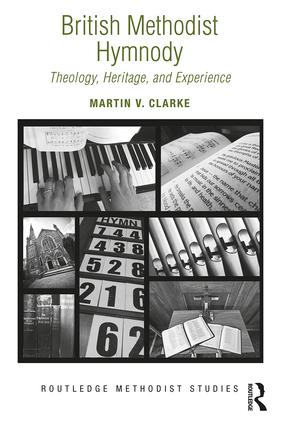
Research – New book on Methodist hymnody published

Martin Clarke’s new book on Methodist hymnody has been published in the Routledge Methodist Studies series, edited from the Oxford Centre for Methodism and Church History.

Hymnody is widely recognised as a central tenet of Methodism’s theological, doctrinal, spiritual, and liturgical identity. Theologically and doctrinally, the content of the hymns has traditionally been a primary vehicle for expressing Methodism’s emphasis on salvation for all, social holiness, and personal commitment, while particular hymns and the communal act of participating in hymn singing have been key elements in the spiritual lives of Methodists.

An important contribution to the history of Methodism, British Methodist Hymnody argues that the significance of hymnody in British Methodism is best understood as a combination of its official status, spiritual expression, popular appeal, and practical application. Seeking to consider what, when, how, and why Methodists sing, British Methodist Hymnody examines the history, perception, and practice of hymnody from Methodism’s small-scale eighteenth-century origins to its place as a worldwide denomination today.

For details of the book and to order a copy go to https://www.routledge.com/British-Methodist-Hymnody-Theology-Heritage-and-Experience/Clarke/p/book/9781472469298