Categories
Uncategorized

“A reading people should always be a knowing people”

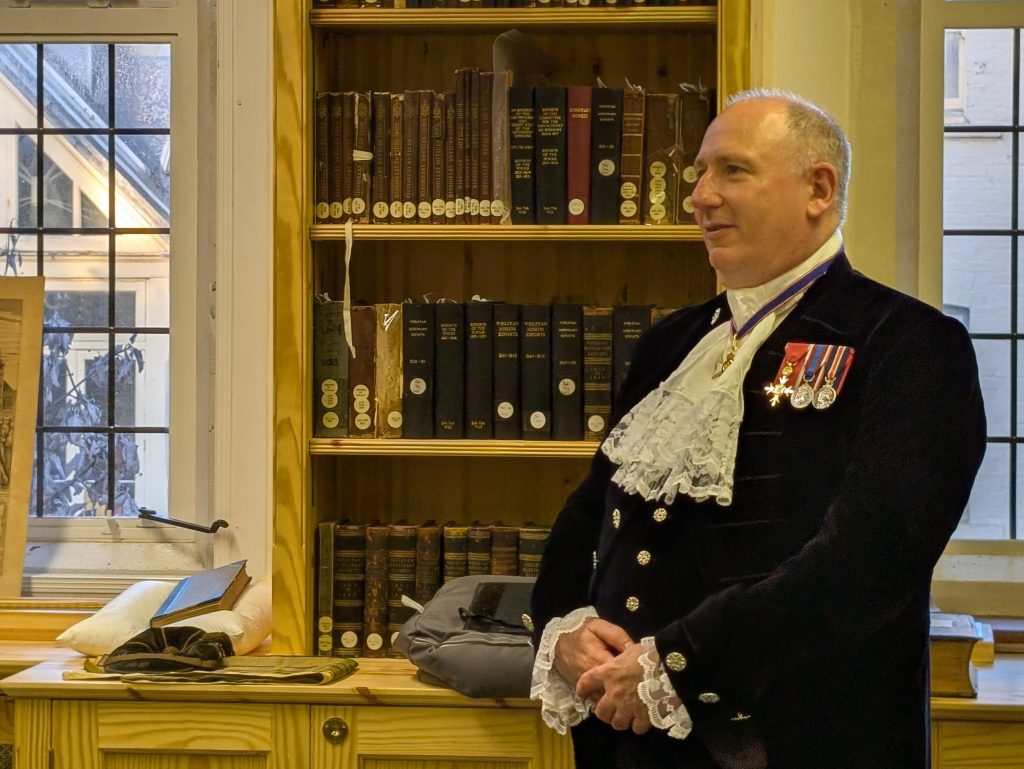
Photograph of John May in his uniform as High Sheriff of Oxfordshire. He is stood in front of a wooden bookshelf in the new Gibbs Library.

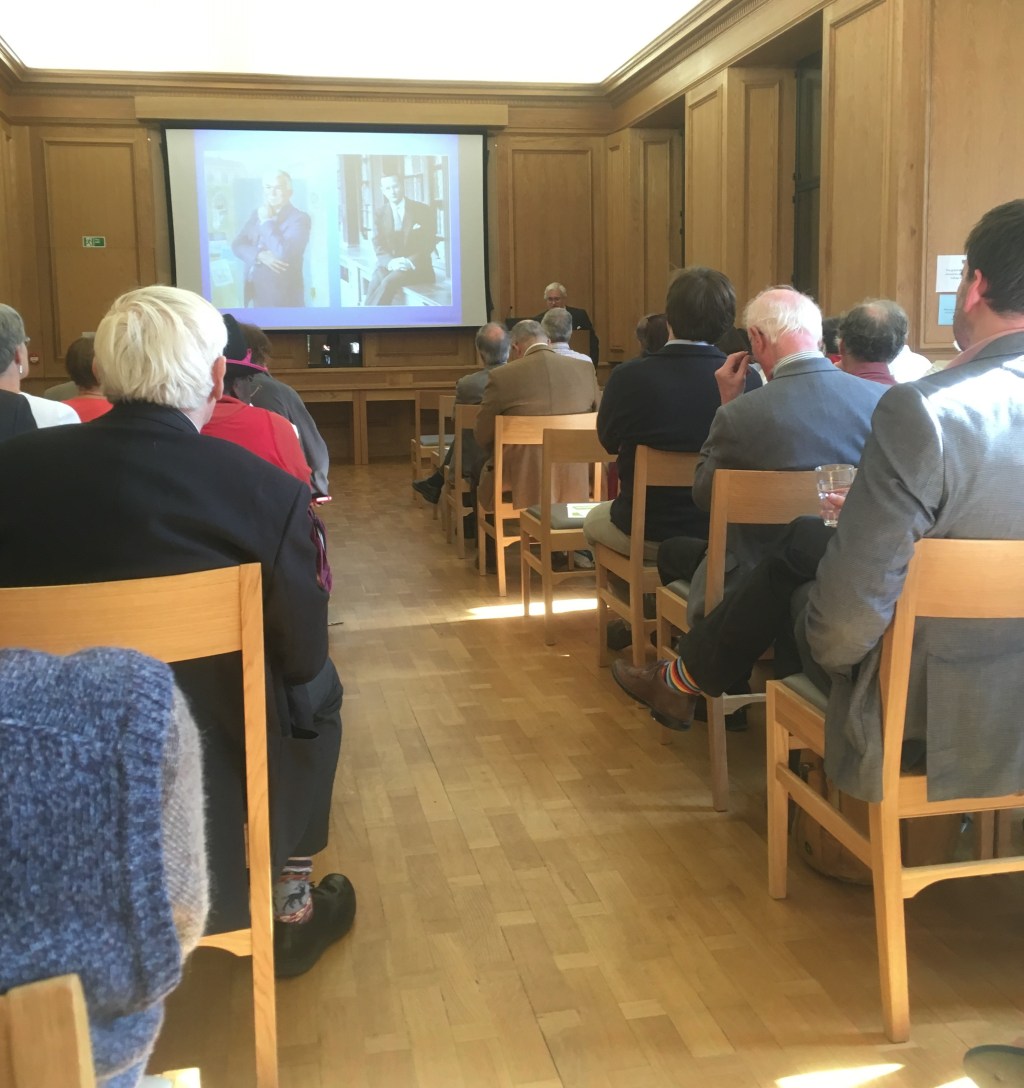
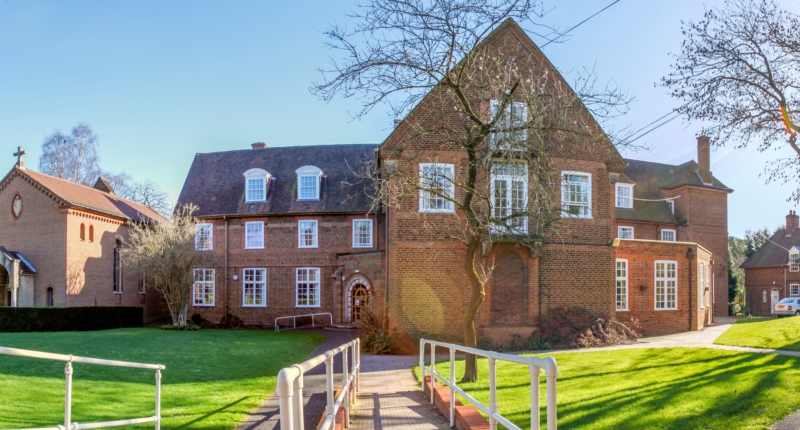
On Monday, 6 October, the new Gibbs Library at Wesley Memorial Church, Oxford was officially opened by the High Sheriff of Oxfordshire, John May. At the event, Mr May expressed his joy to see the new space, particularly as an alumnus of Westminster College. He later noted that it was

“a real joy to see how the [Westminster College Oxford] Trust continues the College’s mission of learning, faith and service” and that the new Library “will be a place where curiosity and compassion meet – and where the great Methodist tradition of education continues to inspire future generations”.

This new Library fulfilled a seventy-year aspiration for the Westminster College Oxford Trust, which is funding this space, and first relocated to the outskirts of the city in 1959. The Gibbs Library houses the College’s archive, alongside a reference collection of Church publications, the papers of eminent church figures, such as Donald English and Colin Morris, and the collections of the Wesley Historical Society (WHS).  It is the fourth home of the WHS Library, which has previously been housed at Wesley’s Chapel, London; Southlands College (at Wimbledon); and Westminster College/Oxford Brookes University at the Harcourt Hill campus on the outskirts of the city. Representatives of each of these institutions attended the opening, along with College trustees, colleagues from other Higher Education Institutions, and representatives of Methodist Heritage.

During the event, Sir Ralph Waller (Chair of Trustees) commented on the excellence of aligning the modern Methodist activities of Wesley Memorial Church and research staff alongside those of our heritage collection, whilst Professor David Matthews (College Trustee and Project Lead) remarked on the importance of libraries to the preservation of a collective record. Dr Clive Norris (WHS Librarian) highlighted the role of the Society’s Library as the enduring legacy of the late Dr John Lenton who served as Society Librarian from 2002 until 2022.

Speeches concluded with a presentation from Dr Thomas Dobson (Assistant WHS Librarian) who highlighted the treasures of the collections, and their role in enabling individuals and groups of all walks of life to engage with their stories as part of a living faith  – something which is also currently displayed in the Wesley Memorial heritage exhibition.

Categories
Uncategorized

Our “First” Annual Report

The first year of the Network, and four fellowships funded by the Westminster College Oxford Trust (WCOT) has been productive, demonstrating both the need for the project and its possibilities for development. The four fellows – Professor Bev Clack, Revd Dr Martin Wellings, Dr Tom Dobson and Dr Daniel Reed – have worked together well, with Drs Dobson and Reed taking on much of the administrative work, including the co-ordination of the new research space at Wesley Memorial (which houses a selection of material from the Wesley Historical Society [WHS] and other historic collections), and also maintaining the legacy of the Oxford Centre for Methodism and Church History (OCMCH). Professor Clack and the Revd. Dr Wellings, have been in discussion with the Connexion as to the development of the fellowships in line with Church objectives – all four fellows have also pursued their own research.

The delay in the opening of the Gibbs Room has been frustrating; but the ‘happy accident’ of the fellowships not having an institutional home at Harris Manchester College, but in the Farmington Institute, has enabled creative thinking about the relationship between academia and the church. This was made plain in the use of the John Wesley Room at Wesley Memorial Church for our first independent event on Methodist Ways of Life. The new research space at Wesley Memorial Church also makes concrete the embedded nature of the fellowships in church life, and further facilitates the exploration of new ways of thinking around the relationship between academic theology and the church.

Finally, as the Network completes its first year of activities, we would like to thank Dr Daniel Reed for all of his work and support this year as one of our foundational Research Fellows. With his one-year fellowship, Dr Reed has co-ordinated the marketing effort for the Methodist Studies Seminar, continued to develop our digital presence (now with added material provided by The Methodist Church); and furthered his own research activities, all whilst studying for a postgraduate diploma in at Aberystwyth University.

The first year of the project has put down foundations and we are now in a position to look to the future with confidence: a confidence we hope that the Trust will share. This following report details some of the activities of the Network, both as individual fellows and collectively.

To read the full report, click the link below.

Categories
Uncategorized

Research – Methodist Ways of Life report now online

On Saturday 12 April 2025, the Westminster Oxford Research Network hosted its first independent event. Held at Wesley Memorial Church, Oxford, sixteen Methodist scholars, ministers, and associated academics met to explore what it is to be a Methodist today, to situate historical and theological discussion alongside each other, and to ‘explore the various understandings of Methodist ways of life, both historically and today’.

The programme included three workshops – History and Identity, Social Justice, and Spirituality – and lots of space for discussion. Outcomes from the day were a series of identified themes and trends in scholarship, and potential future events for the Network. These include: ‘The Church after Covid’, ‘1932 and All That’ (an exploration of British Methodist Union), and ‘A Religious Revival? A Revival of Research’ – many of these different strands for future work have also been captured in a word cloud.

To read the full report please click here.

Categories
Uncategorized

Events – Some Trends in Methodist Education – Transforming Lives: An International Methodist Education Conference, April 2023

On Thursday 27 April, Professor Bill Gibson (OCMCH Director) and Tom Dobson (Collections, Digitisation & Research Officer), joined delegates in Bristol at Transforming Lives, a conference jointly organised by Methodist Schools (UK) and the International Association of Methodist Schools, Colleges and Universities (IAMSCU).

The Centre, along with 1100 other organisations, is an institutional member of IAMSCU, and all six continents had representatives at the conference. In all, the event lasted over a week, visiting our sister College, Southlands, in London; before heading to Bristol and Bath; and then on to Wesley House in Cambridge. This conference explored Methodist engagement with education throughout history, and also Methodist education alongside key issues to the international sector in the present day.

Having explored a series of exhibition stands – making time to acquire the new 275th anniversary history of Kingswood School, and begin planning Christmas activities with other Methodist heritage sites – we joined other delegates from Europe in a regional meeting, discussing how we can work more closely together, and how our collections and work can support their teaching and research activities.

The conference then started in earnest, with welcome speeches from the President and Vice-President of IAMSCU; a representative of Methodist Schools; and the Principal of Kingswood School.

Dr Gary Best opened the first full session in Bristol with a paper focussing on the history of Kingswood School, which had been founded by John Wesley in Bristol in 1748. This was the first fee-paying, boarding school established by Methodists. Dr Best finished his paper by commenting that, for Wesley, education and teaching was as much a vocation as preaching, and that, through education, a child could be raised with good Christian values.

Papers followed that discussed issues surrounding Methodist engagement with education, with a presentation from the Rev. Jennifer Smith (Superintendent Minister of Wesley’s Chapel and Leysian Mission) bridging the gap between Britain and the world; before discussion pieces from Kah-Jin Jeffrey Kuan, Vinita Prakash, and Julio Andre Vilanculos.

What was most interesting, however, was not the discussion around the growth of Methodist education, but how many of the matters raised are cyclical, repeating themselves time and again. Although teacher training was not covered, Dr Best’s paper referenced the fact that Kingswood had purposefully been established in an impoverished area, as Westminster College was just over a century later. The difference here, though, was that Westminster College sought to engage with the local children whereas Kingswood actively discouraged any mingling. Both Kingswood and Westminster were established as co-educational institutions, but both became single sex institutions within the first half a century of their operation, although both latterly returned to operation as co-educational, with Kingswood accepting both male and female students today.

Title page of Westminster College souvenir booklet (1951), OCMCH Digital Collections

Of further interest was that Kingswood School moved to Bath in 1851, the same year Westminster College opened on Horseferry Road, and that both Kingswood and Westminster were designed by James Wilson, resulting in buildings which looked very similar. Aside from these two institutions, Dr Best also noted that in the nineteenth century the varying Methodist denominations in Britain had embraced education as a missional output, none more so than the Methodists who, perhaps, viewed education as the fastest route for social mobility, and also as a link between themselves and the established Church of England.

Following Balfour’s 1902 Education Act (and the greater responsibility this placed on the state for the provision of education), many of these schools closed or were transferred to state management. This also reduced the financial burden on local Methodist circuits, who were expected to provide a good portion of the funding for these schools. Today, however, there are seventy-six Methodist schools in Britain alone, governed by four bodies (Methodist Independent Schools Trust; Methodist Academies and Schools Trust; The Epworth Trust; and the Inspiring Lives Educational Trust’).

The ‘Inspiring Lives Educational Trust’ will begin operation in September 2023 demonstrating, along with a growth in the number of Methodist schools worldwide, that there is a return to the provision of education by Methodists – proving that the trends in Methodist education (as with many things) are cyclical – growing and declining to meet the needs of changing populations and times and (certainly in Britain) changes and trends in direct state funding of education. 

Tom Dobson is Collections, Digitisation, and Research Officer at the OCMCH. He is pursuing a doctoral study titled ‘Training to Teach: Westminster College and the development of Higher Education in the 20th century

Categories
Uncategorized

Events – ‘Rediscovering Evelyn Dunbar: a Life in Art’

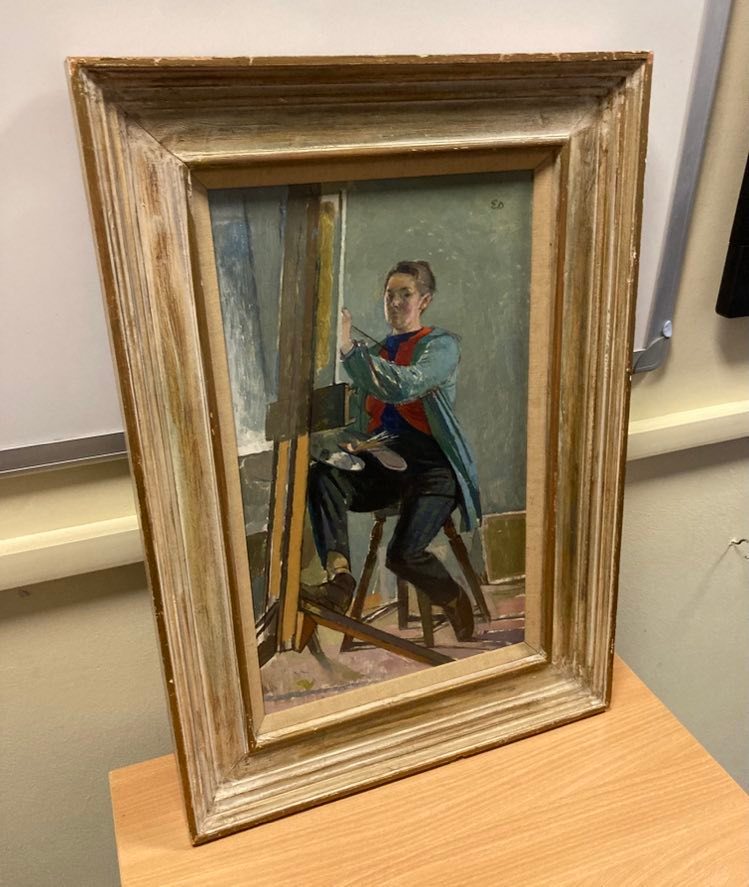
Evelyn Dunbar, Self Portrait (1958), private collection

On Saturday 22 April 2023, the Centre welcomed over 50 guests (both in person and virtually) to the Harcourt Hill Campus for Rediscovering Evelyn Dunbar: a Life in Art – a celebration of the life and work of Evelyn Dunbar (1906-1960) – most famous as the only woman artist salaried by the War Artists Advisory Committee during the Second World War.

Professor Lucy Mazdon, Dean of the Faculty of Humanities and Social Sciences at Oxford Brookes, provided an introductory message:

During the course of the day we heard four excellent papers illuminating different aspects of Dunbar’s life and artistic practice; Peter Vass drew from the recently-discovered sketchbooks now in the Centre’s collections to provide insights into her juvenilia; Gill Clarke explored Dunbar’s illustrations informed by her deep knowledge of gardening and horticulture; Claire Brenard elaborated on Dunbar’s connection with the War Artists Advisory Committee, with specific reference to papers and artworks in the collections of the Imperial War Museum; Jan Cox highlighted the importance of Christian Science as the spiritual foundation of Dunbar’s life and art.

The day concluded with a round table discussion featuring all speakers, led by Ian Holgate, senior lecturer in the History of Art at Oxford Brookes.

This commenced with an address by Christopher Campbell-Howes, who gave an enthusiastic and generous recap of the day’s events, which included indications of future pathways of ‘Dunbar Studies’:

I leave you – you, Oxford Centre for Methodism and Church History – that spark that Peter Vass mentioned, that holy fire, that sacred flame of her work and her memory. Everything that she stood for. And I know that that flame will be well-tended and kept burning brightly.

You can revisit these papers here:

The conference was accompanied by an exhibition of works by Dunbar from the Centre’s collection, supplemented with items loaned from a private collection especially for the occasion.

The Evelyn Dunbar Collection is available for consultation at the Centre. For more information click, here.

Categories
Uncategorized

Digital – YouTube Channel Launch

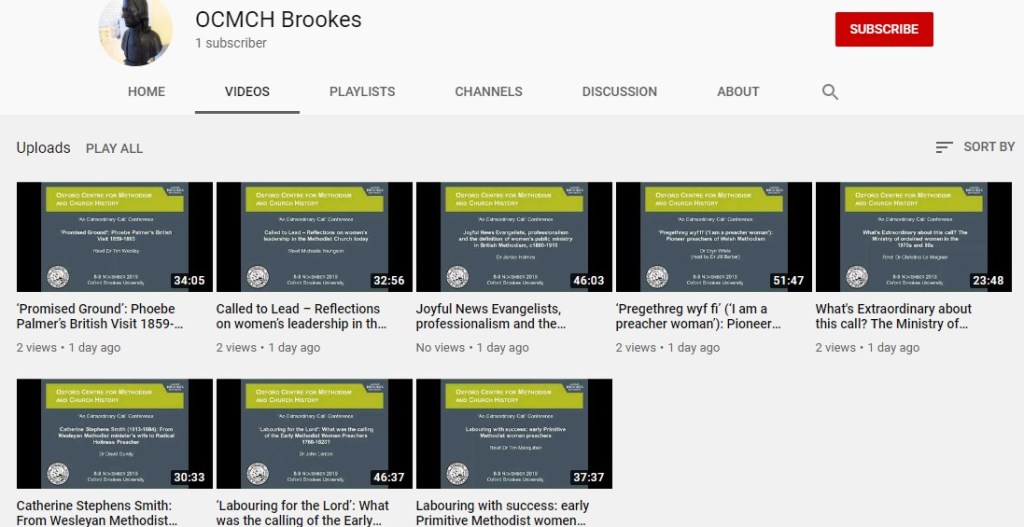
The OCMCH is delighted to announce the launch of our YouTube Channel, accessible here. Look out for recordings of conference papers, lectures, and digitised versions of audio-visual material from our collections.

YouTube Screenshot

This launch leads with recordings of a selection of papers from ‘An Extraordinary Call’, a conference on Methodist women preachers in Britain c1740 to the present was held at the Harcourt Hill Campus of Oxford Brookes University on 8-9 November 2019. This event brought together more than 80 people from around Britain, Europe, and the USA. The conference was hosted by the OCMCH, and arranged through the Wesley Historical Society and Susanna Wesley Foundation, being inspired by the 350th anniversary of her birth. Its particular focus was on women who preached, something which was constitutionally forbidden by the Wesleyan Church (except to other women) between 1803-1910.

79683406_565561400670420_3055530396839051264_n

Recordings are available of papers by Dr David Bundy, Dr Janice Holmes, Revd Dr Christina Le Moignan, Dr John Lenton, Revd Dr Tim Macquiban, Dr Eryn White, Revd Dr Tim Woolley, and the Revd Michaela Youngson.

Categories
Uncategorized

Events – Annual John Wesley Lecture, 2019

On Tuesday 21 May 2019, this year’s annual John Wesley Lecture was delivered by Dr Colin Haydon on the subject of ‘John Wesley, Roman Catholicism and ‘No Popery!’. Dr Haydon has published extensively on the religious history of eighteenth-century Britain, and is the author of Anti-Catholicism in Eighteenth-Century Britain, c1714-80. The lecture was a great success, as Dr Haydon eruditely contrasted Wesley’s published writings against Popery with his known admiration of certain Catholic devotional works and biographies. These readings were placed in the context of Wesley’s century-spanning lifetime, alongside his personal experiences in Ireland, and literary output during periods of anti-Catholic alarm in Britain.

The event was supported by an exhibition organised by OCMCH and Lincoln College which showcased original manuscripts, objects, and printed works from their collections relating to Wesley, his family, and anti-Catholicism in Britain. We are also grateful to the Angus Library for the loan of a 1722 edition of the Book of Common Prayer for display.

The annual John Wesley Lecture is an event organised by the OCMCH, the Wesley Memorial Church and Lincoln College, Oxford, who also act as hosts. The lecture has been delivered by leading scholars of social and religious history, such as Professors J. Richard Watson , Jeremy Black, Grayson Ditchfield, and J. C. D. Clark.

Categories
Uncategorized

Events – Methodist Studies Seminar, 8 December 2018

Queens Foundation

The Oxford Centre for Methodism and Church History, Oxford Brookes University, and the Manchester Wesley Research Centre have worked in partnership for several years. In 2012, the centres established a bi-annual seminar series that has now extended to include the Wesley Study Centre, St John’s College, Durham University; Wesley House, Cambridge; Cliff College; and The Queen’s Foundation, Birmingham. The seminars provide an opportunity for established and emerging scholars of Methodist Studies to present the findings of their research.

The next seminar will be at The Queen’s Foundation in Birmingham (organised by Queen’s and the Oxford Centre for Methodism and Church History) on Saturday 8 December 2018The full programme and abstracts of papers are available here.

Categories
Uncategorized

Events – Anglican-Methodist Union Conference

img481 - Copy
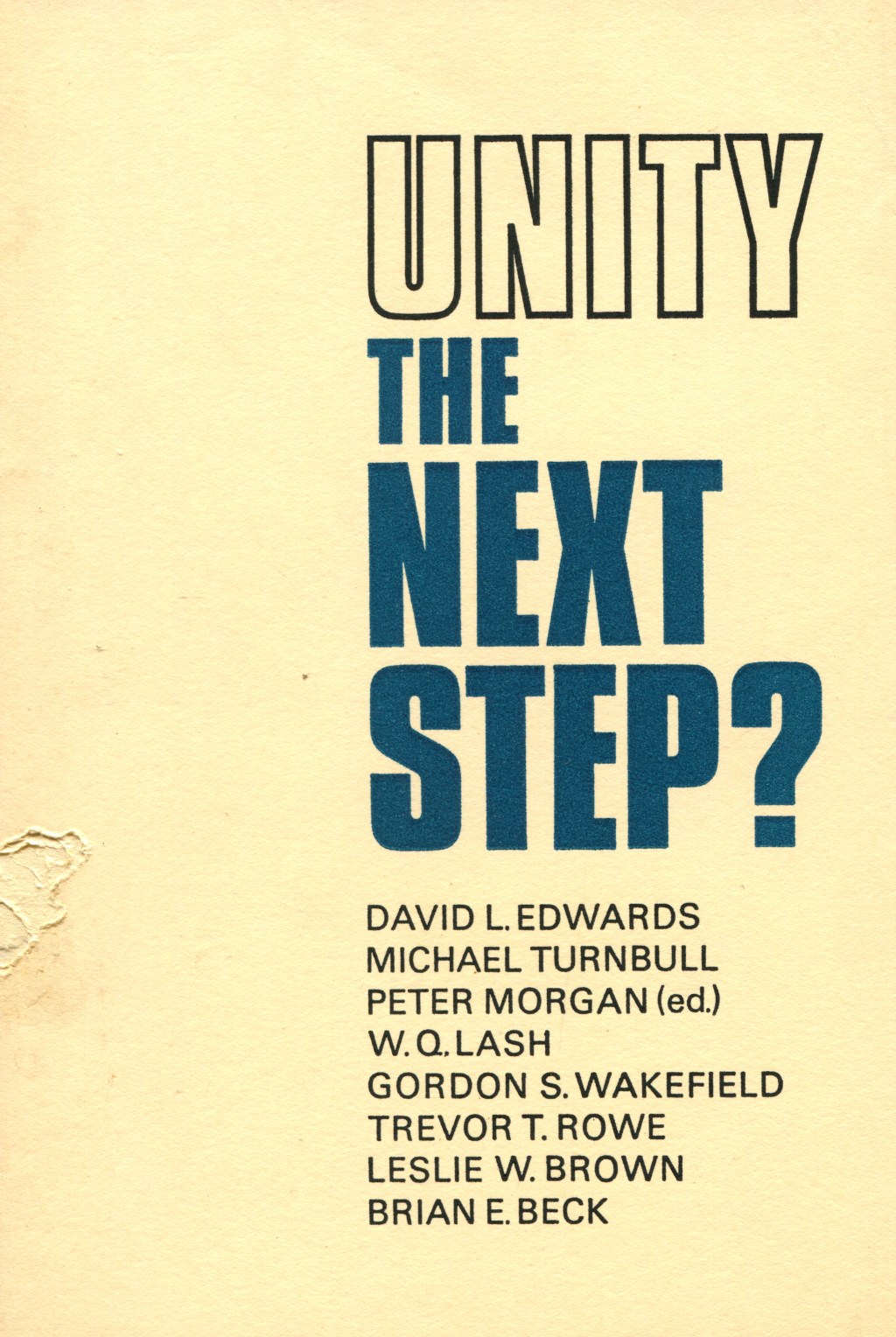
DAMUC/PUB1/1. Books on the subject of Church Union

On Thursday 29 November 2018 the Centre will host a conference exploring aspects of the Anglican-Methodist Union conversations from the 1960s until rejection by the Church of England in 1972. Subsequently, the conversations continued until the two churches signed a Covenant in 2002. The conference will exploit the rich archive collections relating to the discussions held at the Oxford Centre for Methodism and Church History, Oxford Brookes University.

The full programme is as follows:

Oxford Centre for Methodism and Church History
Thursday 29 November 2018
ANGLICAN-METHODIST UNION CONVERSATIONS

Programme:

9.45 arrivals, coffee, welcome

10.00-10.45

Pippa Catterall, University of Westminster: Ambiguity and Ecumenism: Studied Ambiguity in the Anglican-Methodist Conversations

10.45-11.00 break

11.00-12.30

Robert Bates, Oxford Brookes University: Another Kirchenkampf? Episodes from the life of Franz Hildebrandt.

Peter Howson: hon fellow, Oxford Brookes University: Working Outside the Box: the Disappearing Official Interest in non-local Ministry

Claire Surry: A comparison of two ecumenical initiatives: Methodist Union, 1932 and the Anglican Methodist union conversations.

12.30-1.15 Lunch

1.15-2.45

Phillip Tovey, Diocese of Oxford: The Anglican Methodist Ordinal -its significance and influence

John Lenton, Wesley Historical Society: Analysing Participants and their actions in the Conversations

Jane Platt, Oxford Brookes University: Grass-roots religion and its part in the mid-twentieth-century opposition to Anglican-Methodist Union

2.45-3.15 tea

3.15-4.00

Paul Avis, ‘AMICUM -a report and assessment from a member’

4.00-5.00

Martin Wellings, Wesley Memorial Church: The National Liaison Committee

5.00

Close and conference publication

Categories
Uncategorized

Events – Annual Ecclesiastical History Colloquium

On Thursday 22 June, the Oxford Centre for Methodism and Church History will hold its annual Ecclesiastical History Colloquium. This year the Colloquium is being held in conjunction with Brigham Young University’s London Centre and Wheatley Institution. Brigham Young University had supported the travel costs of Dr Matthew Holland, President, Utah Valley University, Utah and of Dr Michael Breidenbach of Ave Maria University, Florida, both of whom will speak at the event.

The full programme is:

Clive Norris Research Associate, OCMCH: The Financing of John Wesley’s Methodism, c. 1740-1800.

William Gibson, Director of the OCMCH, Oxford Brookes University: The Church and Sex in the Eighteenth Century

Peter Forsaith, Research Fellow, OCMCH:  Image and Identity – John Wesley: A study in portraiture.

Matthew Holland, President, Utah Valley University, Utah, USA: ‘Biblical Charity and Public Virtue in the Making of America’

Jamie Latham, University of Cambridge: ‘A Statistical Survey of Clerical Publishing in the English Short-Title Catalogue, 1660-1800.’

Michael Breidenbach, Assistant Professor, Ave Maria University, Florida, USA: ‘Republican Bishops in the Atlantic World’.