Categories
Uncategorized

Black History Month – Recovering Oxford Brookes University’s black heritage from the archives

For Black History Month, we’re delving into the Centre’s archives to learn more about Oxford Brookes University’s black heritage.

During a recent digitisation project, we made freely-accessible online a photograph album from the Westminster Training College archives dating from 1893 to 1912.1 This belongs to a series that commences in the 1850s and mainly features formal group shots of students, staff, and sports teams arranged chronologically. It is the most important visual record of the college’s earliest history.

What’s remarkable about one Westminster College photograph for 1904-5 is that it is the first to include a black student. He stands prominently in the centre of the group, just behind the college staff and the chairman of the Union Society, and is proudly wearing a form of African dress over his suit. Notes alongside the photograph identify him as ‘Nichols’.2

Corroboration with the Wesleyan Education Committee’s teachers’ register reveals this was the Rev. William G. Nicol of Sierra Leone.3 From a Creole background, Nicol was a graduate of Fourah Bay College in Freetown affiliated with the University of Durham; he matriculated in 1887 and earned his B.A. in 1891.4 Fourah Bay opened in 1827, and was dubbed the ‘Athens of West Africa’. It was the first Sub-Saharan establishment of higher education founded after the collapse of the ancient university of Timbuktu.5

Having earned his degree, Nicol was a tutor at the High School in Freetown. Already prominent in Wesleyan circles in Sierra Leone, in 1892 he was a public speaker during centenary celebrations marking 100 years of Methodism in the country.6 Nicol’s name first appears in the proceedings of the Wesleyan Methodist Conference in 1896, where he is described as a ‘native assistant minister’.7 The ‘assistant’ part was dropped in 1901 when he was ordained. ‘Native’ ministers were equipped for undertaking colonial duties, but were not permitted by the Conference to undertake positions in Britain.8

In 1903, Nicol was promoted to vice-principal of the High School, but he was destined for still greater things.9 £20 was raised by the Wesleyan circuit in Freetown to send Nicol to England to further his training at Westminster College and better qualify himself to succeed as principal.10 This step was supported by the Wesleyan Methodist Missionary Society and the Colonial Office.11

It was not uncommon in this period for Westminster students to go onto careers in the wider Empire. The registers record that they served in Australia, Canada, India, South Africa (and beyond) as teachers, inspectors, ministers, and missionaries.12 But Nicol was the first to come from Africa to England. His arrival was warmly acknowledged in The Westminsterian for May 1904, just as other students were concluding their classes for the year.13

The Westminsterian (May 1904)

Aged around 35-40, Nicol was senior to his Westminster classmates (and even some tutors) in age, academic, and ministerial terms – having been ordained and holding a Durham B.A. That said, it appears that he did engage with student life at the college. On 12 November 1904, Nicol addressed the Senior Debating Society on the subject of ‘Individuality’.14

SOAS. MMS Box 795. File 1905. Item 29, letter from William G. Nicol, 9 August 1905

Surviving letters from Nicol’s time at Westminster mainly concern his accommodation and financial support. He lodged in Medway Street, immediately adjacent to the college site, and was reliant on regular maintenance from his teaching salary and the Wesleyan Methodist Missionary Society. Nicol also requested funds to buy a new set of teeth, having suffered twenty-two extractions(!).15

Nicol also participated in wider Wesleyan life in England, making appearances at local meetings and events. He can be identified as one of several preachers from Sierra Leone to address English congregations in the first years of the twentieth century.16 This sometimes brought cultural attitudes into sharper focus. In May 1904, shortly after his arrival from Sierra Leone, Nicol attended a Missionary Meeting in Guildford where he was described as ‘the centre of interest’. Newspaper coverage seemed as much concerned with describing his appearance in racialised language as providing an account of the speech he gave. Appealing to sensibilities of the time, Nicol addressed the meeting about the progress of missionary work and said,

He stood there that night of living proof of Methodist evangelism and self-sacrifice, by which thousands of his brothers in West Africa had been emancipated from heathenism

In Methodist circles, as elsewhere, attitudes towards people from Africa were still openly caricatured and racially-stereotyped. The June 1904 issue of The Westminsterian referred glowingly to a performance at the college by a blackface minstrel troupe, then still a common form of popular entertainment.17

Yorkshire Evening Press (26 August 1905)

But other appearances by Nicol were reported in less contentious terms. In August 1905 he was a guest preacher at the opening of the new Lecture Hall and Social Rooms at Melbourne Terrace Wesleyan Chapel in York.18 This may have been on his way to or from Durham, where he received a Masters degree for the ‘excellence’ of a paper on Socialism.19

Nicol returned to Sierra Leone at the end of his year at Westminster College, and successfully took up the principalship of the High School and Training Institution in Freetown. He is recorded in that post in the Wesleyan Methodist Conference minutes until 1911 when he left the Connexion.20

Subsequently, Nicol undertook ministerial and teaching work in the Niger Delta.21 By 1914, he was leader of a ‘foreigners church’ in Calabar, in modern-day Nigeria.22 When this interdenominational church became associated with the Niger Delta Pastorate, Nicol and the Wesleyans broke away – but he was soon replaced from Lagos.23 He remained in the area for around a decade before returning to Sierra Leone to teach under the colonial government. Nicol was senior master at the Prince of Wales School in 1930.24

By the turn of the twentieth century, Westminster College had trained almost 5000 teachers.25 Its contribution to the history of education in Britain cannot be underestimated. The identification of William G. Nicol as the first person from Africa to attend the college – and so, the first black student to attend a predecessor institution of Oxford Brookes University – is an important step in recovering black heritage from the archives.

To find out more about Black History Month 2023 celebrations at Oxford Brookes University, click here.


  1. OCMCH. Westminster College Archives, Ph/a/3, college photograph album, 1893-1912. Accessible online, here. ↩︎
  2. We’re grateful to members of the ‘Old Photos of Sierra Leone’ Facebook group for their enthusiasm and input into the research for this blog post. ↩︎
  3. OCMCH. Westminster College Archives, B/1/a/5, register of teachers, 1894-1922. ↩︎
  4. Fourah Bay’s association with Durham began in 1876, with over fifty students earning degrees in its first decade or so. See, Matthew Paul Andrews, ‘Durham University: Last of the Ancient Universities and First of the New (1831-1871)’, unpublished University of Durham PhD thesis (2016). With thanks to Jonathan Bush, University Archivist at Durham, for more information. ↩︎
  5. ‘Old Fourah Bay College’, UNESCO World Heritage Convention [accessed at https://whc.unesco.org/en/tentativelists/5744/ on 16 October 2023]. ↩︎
  6. Charles Marke, Origin of Wesleyan Methodism in Sierra Leone and History of its Missions (1913), p. 130. ↩︎
  7. Minutes of the Wesleyan Methodist Conference. ↩︎
  8. Thanks to Dr John Lenton for advice on this subject. ↩︎
  9. Marke, Origin of Wesleyan Methodism in Sierra Leone and History of its Missions, p. 165. ↩︎
  10. Ibid., p. 168. ↩︎
  11. The Methodist Recorder (29 May 1905). ↩︎
  12. OCMCH. Westminster College Archives, B/1/a/5, register of teachers, 1894-1922. ↩︎
  13. The Westminsterian, vol. XIII, no. 6 (May 1904), p. 2. ↩︎
  14. The Westminsterian, vol. XIV, no. 3 (Christmas 1904), p. 16. ↩︎
  15. SOAS. MMS Box 794. File 1904. Item 22, letter from W. G. Nicol, to, W. H. Findlay, 26 April 1904; MMS Box 795. File 1905. Item 24, letter from W. G. Nicol, 15 July 1905; MMS Box 795. File 1905. Item 29, letter from W. G. Nicol, 9 August 1905. With thanks to Ed Hood at SOAS. ↩︎
  16. In 1901, the Rev. T. T. Campbell spoke in Burnley, and the Rev. C. W. L. Coker in Runcorn. See, Burnley Express (6 March 1901); Runcorn Examiner (3 May 1901). ↩︎
  17. The Westminsterian, vol. XIII, no. 7 (June 1904), p. 4. ↩︎
  18. Yorkshire Evening Press (26 August 1905). ↩︎
  19. The Methodist Recorder (29 May 1905). ↩︎
  20. Minutes of Wesleyan Methodist Conference (1911), p. 152. ↩︎
  21. Mercy Amba Oduyoye, The Wesleyan Presence in Nigeria, 1842-1962, An Exploration of Power, Control and Partnership in Mission (1992), pp. 107-110. ↩︎
  22. Rosalind I. J. Hacket, Religion in Calabar, The Religious Life of a Nigerian Town (1989), p. 79. ↩︎
  23. G. O. M. Tasie, Christian Missionary Enterprise in the Niger Delta, 1864-1918 (1978), p. 220. ↩︎
  24. Sierra Leone Blue Book (1930), p. 99. ↩︎
  25. OCMCH. Westminster College Archives, B/1/a/3, register of teachers, 1861-1896. Note on students figures by J. R. Langler dated 23 March 1898. Accessible online, here. ↩︎
Categories
Uncategorized

Black History Month – the Methodist Church and Historic Links to Transatlantic Slavery

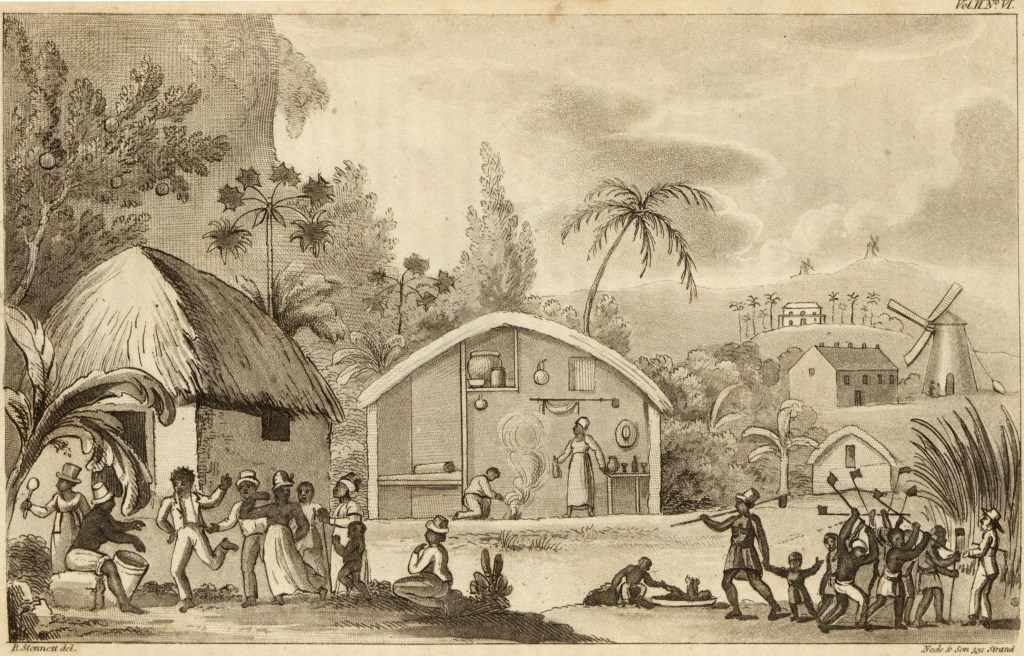
Plantation Scene and Slave Houses, Barbados, 1807-08 (Slavery Images)

Clive Norris, a historian of Methodism who works with the Oxford Centre for Methodism and Church History, has been asked by the Methodist Church of Great Britain to investigate its historic links with the enslavement of Africans.

It is at first sight an odd request, for two reasons.

First, John Wesley (1703-91), who is widely recognised as the founder of Methodism, was an active campaigner for the abolition of enslavement. Lying on his deathbed, he asked a friend to read to him from the autobiography of Olaudah Equiano, formerly an enslaved African himself, a publication to which Wesley had subscribed.[1] And the last of his letters which has survived, written a week before he died, was to fellow-abolitionist William Wilberforce, and urged him to continue his ‘glorious enterprise in opposing that execrable villainy, which is the scandal of religion, of England, and of human nature. . . Go on, in the name of God and in the power of His might, till even American slavery (the vilest that ever saw the sun) shall vanish away before it.’[2] Second, Methodists were typically artisans and other working people; few would have the means to invest in trafficking enslaved Africans or in Caribbean sugar estates. The movement was financed primarily by the regular giving of its members, and the going rate was a mere penny a week, perhaps £5 today.

Olaudah Equiano/Gustavas Vassa, 1791 (Slavery Images)

However, we cannot escape the fact that the transatlantic trade in enslaved Africans was a significant component of the eighteenth-century British economy, comprising as it did the ‘triangular trade’ between Africa, the Americas and the homeland; the extensive production of cotton and other commodities on plantations worked by enslaved Africans; and the many industries in Britain which depended on these activities for their raw materials or markets. Overall it is estimated that ‘economic activities equivalent to around 11% of British GDP were directly involved in or associated with the American plantation complex.’[3] 

One early stronghold of Methodism was Bristol, which was a major port serving the triangular trade. Bristol became involved in the transatlantic trade in enslaved Africans in 1698, when the London-based Royal African Company lost its monopoly of the English trade with West Africa.[4] Between 1698 and 1807 Bristol merchants financed at least 2,060 voyages to Africa merchants, most before 1750;[5] between 1756 and 1786 Bristol sent 588 slave ships to Africa, though the rising port of Liverpool sent 1,858.[6] Between 1698 and 1807 it is estimated that Bristol slaving ships carried some 587,000 abducted Africans to the Americas, of whom 486,000 (82.8 per cent) survived the Atlantic crossing. This represented around one-sixth of the British empire’s slave trade, and Bristol was probably the third largest Atlantic slave port.[7]

The tentacles of the trade reached into every corner of Bristol’s economy. Bristol’s merchants financed the voyages of the ships which abducted thousands of men, women and children from Africa, and took them to the Americas to be worked to death. Bristolians captained the ships and provided their crews. Bristol shipwrights built and maintained the vessels, local dockers manned the port, and local traders furnished the food and other supplies.[8] Bristol coffee houses hosted endless business meetings; local people also worked as builders and tradesmen, servants, and in many other ways to service the slave trade indirectly. And crucially, Bristol banks such as the ’Old Bank’ on George Street financed the slave trade and the wider commercial life of the city. As one historian has observed: ‘In the period of Bristol’s greatest prosperity, few of its citizens did not have some connection, direct or indirect, with slaving ventures.’[9] It seems likely, therefore, that—even if many had principled objections—some of the 750 or so members of Bristol’s Methodist society had links with the trafficking and subsequent exploitation of enslaved Africans, and Clive is exploring this possibility.

Establishing the facts will be challenging but it is of course only part of the story. It immediately prompts the questions: why did people act as they did and how should we respond to that? Take for example, Sir Philip Gibbes (1731-1815), a prominent Barbados slaveholder with Bristol connections. He was widely admired for his piety and humanity. In his autobiography, Equiano described him as ‘a most worthy and humane gentleman’ who ‘saves the lives of his negroes, and keeps them healthy, and as happy as the condition of slavery can admit’.[10] John Wesley counted him as a friend.[11] Gibbes sought to provide for the spiritual welfare of his enslaved workers but only in a strictly limited way. Thus he encouraged the saying of grace before their breakfast (‘bless our labours . . . grant that this present meal may convey to our bodies nourishment and health, and to our minds gratitude and love’); but not before lunch, which would be too disruptive to the working day.[12] Hero or villain? The answer is that the eighteenth century was an age of complexity, contradiction, and confusion, much like our own.


[1] Journal and Diaries VII (1787-1791) [vol. 24 of The Works of John Wesley], ed. W. Reginald Ward and Richard P. Heitzenrater (Nashville, TN: Abingdon Press, 2003), 348. 

[2] John Wesley to William Wilberforce (24 February 1791), The Letters of the Rev. John Wesley, A.M., ed. John Telford, 8 vols (London: Epworth Press, 1931), VIII:265.

[3] Klas Rönnbäck, “On the economic importance of the slave plantation complex to the British economy during the eighteenth century: a value-added approach,” Journal of Global History 13 (2018), 327.

[4] David Richardson, The Bristol Slave Traders: a collective portrait (Bristol: Historical Association, Bristol Branch, 1985), 1.

[5] David Richardson, “Slavery and Bristol’s ‘golden age’,” Slavery & Abolition 26, no. 1 (2005), 36.

[6] C. M. MacInnes, Bristol and the Slave Trade (Bristol: Historical Association, Bristol Branch, 1968), 6.

[7] Richardson, ‘Slavery and Bristol’, 36, 38.

[8] Richard B. Sheridan, “The Commercial and Financial Organization of the British Slave Trade, 1750-1807,” Economic History Review New Series, Vol. 11, no. 2 (1958), 249. There was a trend over time for enslaved Africans increasingly to be sold on credit; the slavers returned home in ballast, while the planters marketed their sugar and tobacco directly; ibid., 252.

[9] C. Duncan Rice, The Rise and Fall of Black Slavery (London and Basingstoke, 1975), 131.

[10] Olaudah Equiano, The Interesting Narrative of the Life of Olaudah Equiano, or Gustavus Vassa, the African. Written by Himself, Fourth Edition, Enlarged, 2 vols. (London: Printed for, and sold by the Author, 1789), I:210.

[11] John A. Vickers, ‘The Gibbes Family of Hilton Park: an unpublished correspondence of John Wesley’, Methodist History, vol. 4 (1968), 43-61. 

[12] Philip Gibbes, Instructions for the Treatment of Negroes (London: Shepperson and Reynolds, 1786, reprinted with additions 1797), 79-81.

Categories
Uncategorized

Black History Month – Samuel Barber (1783-1828)

It is notoriously difficult to reconstruct the biographies of lowly people in the past. But there are lives, testimonies, and obituaries of early plebeian Methodists in denominational magazines and other publications. One obituary of considerable interest is that of Samuel Barber (1783-1828), published in The Primitive Methodist Magazine in 1829. For Barber was not only an early Primitive Methodist lay preacher but also a man of mixed race.

Portrait (possibly) of Francis Barber (1742/3-1801), 1770s

Samuel Barber was born in 1783, in London, the son of Francis Barber, the black, formerly enslaved servant of Dr Samuel Johnson, and his English wife, Elizabeth. Francis was Johnson’s residuary legatee, and the Barber family, after its benefactor’s death in 1784, moved to Lichfield, Johnson’s home town. There Samuel attended a boarding school and, in c.1797, entered the service of a Burslem surgeon, Gregory Hickman. Later, he entered the employ of the Burslem potter Enoch Wood (who had produced the most famous bust of John Wesley). Barber became a potter’s printer, preparing the designs for transfer on to the wares; he came to work frequently fourteen or sixteen hours a day in the potteries.

While Hickman’s servant, Barber was, he afterwards claimed, ‘as proud a fop as ever lived’. He seemingly went ‘as far in dress and ornament as his circumstances would admit’, and was, too, ‘much given to dancing, music, and gay company’. These details are derived from the obituary, written by the Primitive Methodist preacher John Smith. Smith knew Barber personally in Staffordshire in the 1820s, and hence could write authoritatively; but it must be stressed that the memoir is also formulaic and heavily didactic, and potentially distortive.

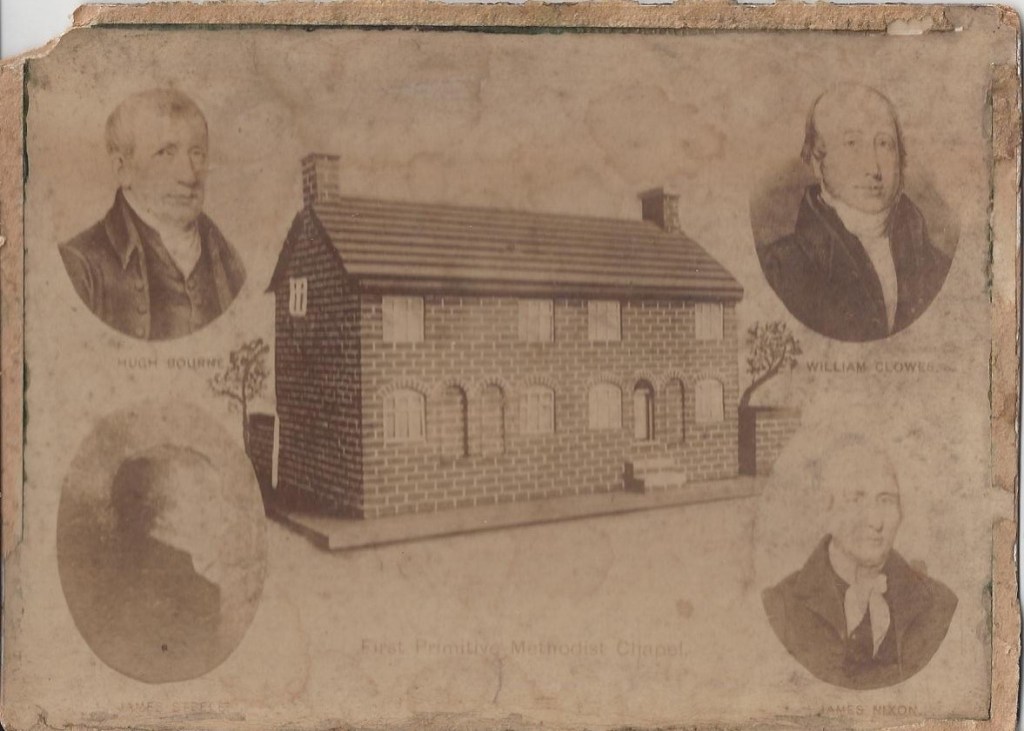
In 1805 or 1806, Barber attended a Methodist assembly at Burslem, and was hugely moved by the preacher. Beset by agonies of conscience and fears of hell, the ‘gay young man now appeared like a condemned criminal’. Then, one Sunday, he knelt in the snow, crying ‘“God be merciful to me, a sinner”’; whereupon, the ‘load of guilt and misery was removed, [and] the speaking blood of Jesus proclaimed God reconciled’: ‘Heaven was within him.’ For Barber, moreover, his residence in the Potteries doubtless appeared providential. In 1810, Hugh Bourne and William Clowes established the Primitive Methodist Connexion, and, the next year, its initial general meeting was held, and its first chapel built, at Tunstall, where Barber, it seems, now lived. Barber quickly joined the Primitive Methodists.

Englesea Brook Museum. Tunstall first Primitive Methodist chapel, 1811

Feeling ‘a growing deadness to the world’, Barber yearned for a deepening sense of God’s presence for himself. For others, he desperately wanted to secure ‘the welfare of immortal souls’. Humans, he wrote, might ‘be saved, God is just, and the justifier of all that believe in him’. Christ died for sinners. But Barber also emphasized the torments of hell, ‘everlasting burning […] with devils and damned spirits’. Life was short, he told his hearers, and they should remember ‘the unbounded goodness of God’, His ‘inflexible justice’, and ‘the durability of Hell torments’.

Barber was a local preacher from 1809; when he died, he was the eleventh most senior of fifty-five preachers on the Primitive Methodists’ Tunstall circuit. As a preacher, ‘his talents’, Smith thought, ‘were not of the first order’. Nevertheless, his sermons could be powerful and, to those with troubled consciences, biting and terrifying; his uncompromising theology was easily intelligible to plebeian Primitive Methodist hearers. On some Sundays, Barber went fifteen or twenty miles in order to preach, returning the same day. The 1815 Tunstall circuit plan illustrates his commitment: ‘12th November 10am Norton 2pm Dunwood […] 17th December 10am Wrinehill 2pm Englesea Brook’. As a repentant sinner, he was probably greatly compelling.

Barber’s other evangelizing endeavours amply compensated for any deficiencies in his preaching. After his conversion, he ‘became useful’ in the Burslem Sunday School. He instructed the poor in the workhouse weekly. He was the secretary of the Tunstall Religious Tract Visiting Society, which, in the words of a handbill, aimed to distribute ‘Testaments, Sermons, and Religious Tracts’ to ‘the thoughtless or ignorant poor’ in remote places. He himself distributed tracts, travelling many miles to the neighbourhood’s cottages, and visiting the poor. ‘Several places, where there are now good societies,’ Smith noted, ‘were opened by him.’ When opportunities presented themselves, he evangelized among ‘shop-mates, neighbours, or strangers’, since souls ‘were alike valuable to him’.

How important for Barber was his part-African ancestry? His skin was noticeably dark, and, locally, he was known as ‘Black Sam’. Long after his death, Hickman’s daughter called him ‘a mulatto servant’; another, very elderly lady used ‘negro servant’. His son, Isaac, had ‘woolly hair’. Before his conversion, Barber was certainly troubled by his lineage. The Devil ‘suggested that there was no mercy for him, because he was of African extraction, and was of the coloured tribe’; and Barber thought ‘that his soul was deeper dyed than his body’. Such concerns linking race and sinfulness perhaps persisted. If so, they may partly explain his strictness with, and beating of, his children, considered over-severe by some friends. When he died, The Liverpool Mercury noted he was the son of Johnson’s ‘faithful black servant’.

Barber died in 1828, convinced that he was saved. Of course, it would be possible to write a hostile account using the information provided by Smith: an account depicting Barber as a religious fanatic, a psychological bully, a monomaniac (and monumental) bore. Readers of this blog may do that for themselves -– or perhaps already have. Yet that risks intruding anachronistic value-judgments, value-judgments spawned in an increasingly secular-minded age. Smith’s obituary has the virtue of presenting the life while espousing Barber’s own world-view, and stressing the beliefs and convictions which, for Barber, gave his life (on Earth) purpose.

Dr Colin Haydon has published widely on the history of religion in England from c1660 to c1820, including Anti-Catholicism in Eighteenth-Century England c.1714-80 (1994) and John Henry Williams (1747-1829): ‘Political Clergyman’ (2007). He delivered the annual John Wesley Lecture at Oxford in 2019

Categories
Uncategorized

Black History Month – Peering into a life’s work: the Francis L. Bartels Collection

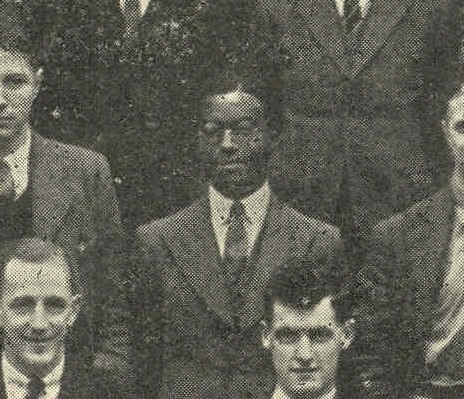
Westminster College Archives. Fourth Year group photograph, 1934 (detail)

Much progress has been made in the Francis L. Bartels Collection since last October’s post. My contribution was discussed as a potential task back in January 2020 as I was about to embark on a placement module in my second year as an Undergraduate, though in the end I worked on a different project – until the placement was cut short. When the first lockdown hit, I still had five weeks left with the Centre. Though I was not penalised in the marking of the module, I certainly felt I had left something unfinished, and yearned to return to the archive to carry out further work. After graduating this July, I reached out to Tom Dobson, to inquire about the possibility of a further voluntary placement over the summer. Throughout August, I listed approximately 600 individual items for the collection.

Dr Peter Forsaith has already discussed Dr Bartels’s biographical details in a previous post at length, for me to repeat them here would be superfluous – I shall instead discuss the impression of Bartels that listing his personal papers has left me.

An incredibly diligent man with a profound attention to detail, many of the documents within the collection are extensively annotated front and back.

Bartels would pass on notes regarding speeches and reports regularly, suggesting changes in phrasing here and there, or provide unrestrained critique if the document in question did not meet his exacting standards.

Peering into Dr Bartels’s collection of newspaper clippings, we may discover a different side of the man. Of the pages he’d kept from The Listener, for example, the majority are printed sermons by Gerald Priestland,[1] indicating an enduring interest in questions of religion and spirituality.

This notion is further reinforced by Bartels’s membership of the Society for African Church History.

The existence of the collection itself also betrays a lot about Bartels. While the original organisation of the collection may have suffered as a result of storage and transport before it made its way to the OCMCH, Bartels clearly had a system in mind as he saved various documents and organised them within it. Correspondence, conference materials, newspaper clippings, and other publications are all collected and labelled in various folders according to their relation to either specific events or broader themes. This is not a collection of all the papers that had been found among Bartels’s effects upon his death, but a system he had evidently been curating throughout his whole life. It is difficult to put into words what it feels like to peer into a life’s work.

Indeed, listing the documents has been more akin to trying to reconstruct a catalogue following the original’s destruction. Dr Forsaith’s ambition is to organise the collection so that were Bartels still alive today, he should still be able to find a specific document in it. This is a worthy goal.

Michael Orsovszki

MA History student at Oxford Brookes


[1] Quaker and BBC religious affairs correspondent between 1977 and 1982

Categories
Uncategorized

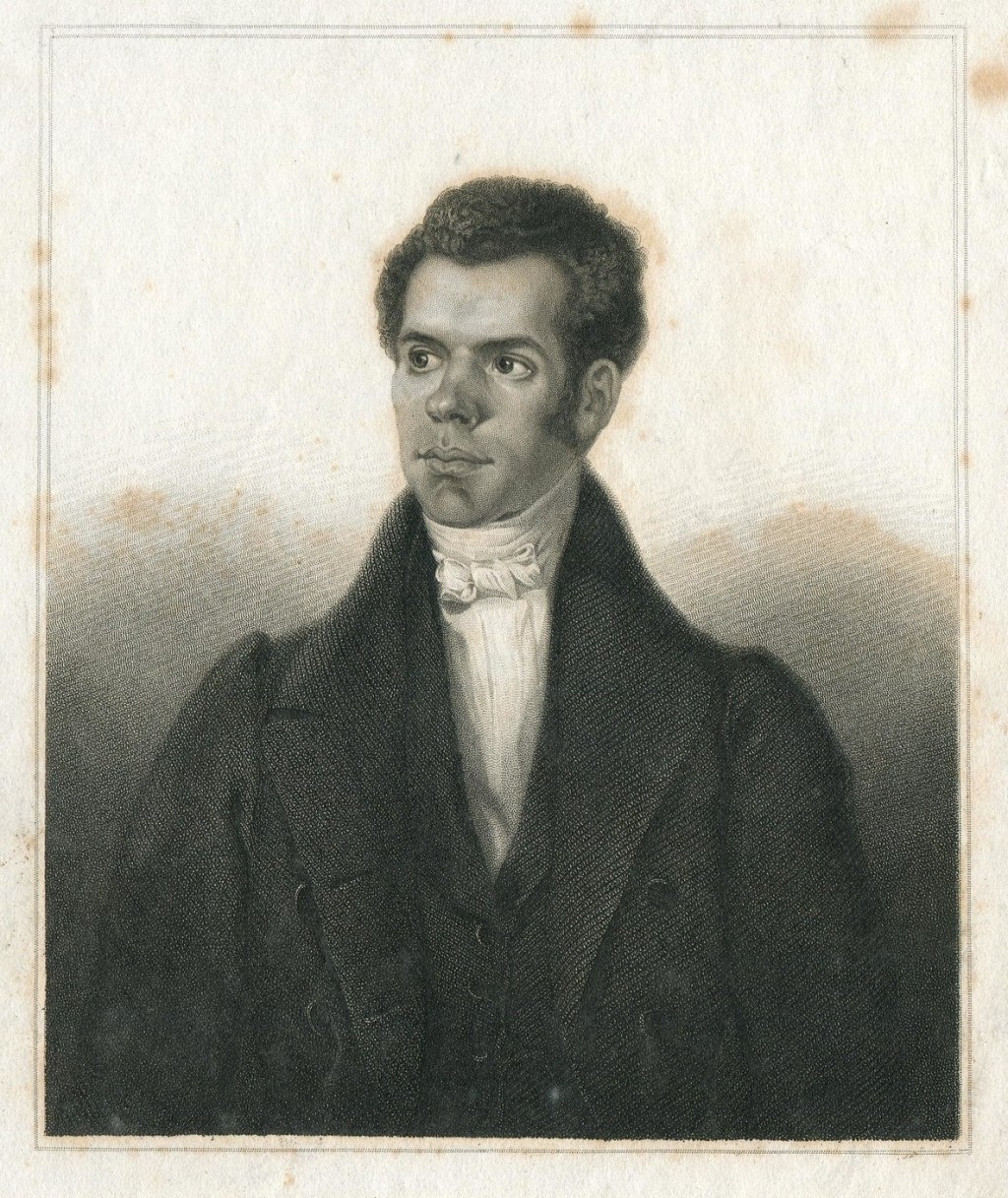
Black History Month – Thomas Birch Freeman (1809-1890), missionary to West Africa

Alison Butler of the Methodist Heritage Committee reconsiders Freeman’s legacy

In marking the contribution of Thomas Birch Freeman to Methodism’s missionary work, we should surely also recognise those less well-known helpers, whose work ensured Freeman’s success.

Thomas Birch Freeman, Wesleyan-Methodist Magazine, vol. 65 (1842), facing p. 353.
https://flic.kr/p/2edhqLf

Such as they are, the biographical details relating to Freeman are readily available[1] and his story has been told before in Black History Month[2]. His service as a successful and particularly long-lived Wesleyan Methodist missionary in West Africa between 1838 and 1857 and then again from 1878 to 1890 has been recounted in respected biographies and authoritative accounts of the work of Methodist missions[3]. However, even setting aside the more complex issue of the entanglement of British missionary and colonial interests, I am wondering whether a reappraisal of his personal contribution is not now due.

For what is barely explored is the extent to which Freeman’s effectiveness was indebted to the humility, capability and commitment of African Christians, some of whom were witnessing to their faith before Methodist missionaries such as Freeman arrived. These men and women are almost always referred to, in passing, as having been ‘identified’ as suitable workers, or who, in the case of William de Graft, ‘accompanied’ but quite possibly out shone Freeman, on their successful missionary lecture-cum-fundraising tour of Britain in 1840.

That Freeman was able to acknowledge de Graft to be a gifted speaker and preacher has been framed as, and was, enlightened for the time. But it leaves open to question whether, overall, Freeman learned as much from men such as de Graft, as the other way around. Similarly Freeman’s lauded willingness to recommend black Methodists for ordination, side steps the designation of ‘catechist’ initially given to them. (Had they been white, these men would almost certainly have been immediately ordained, but would then have cost the Missionary Society more.)

Freeman is mildly criticised for having been incompetent at keeping control of his expenditure (and resigned from the ministry in 1857 as a result). Less is made of his inability to speak native languages. Most accounts simply refer to his use of (nameless) translators. Since his preaching was, relatively speaking, extremely successful, one wonders what those who saw him speak actually heard. Where is the credit shown to those who were able to translate, on the spot? How did they manage to communicate the essence of Freeman’s style of preaching in a way that led people to faith?

Thankfully Freeman’s botanical interests and expertise are now receiving some dedicated attention[4], although this work is still to be published. Sadly the two enduring passions of Freeman’s life: preaching the word and studying plants have thus far been researched separately. I suspect a more holistic approach will be needed to do him (and others) justice and to understand who Freeman really was, or at least could have been. One wonders how his life might have turned out, had his employer not made him choose between his faith and his work as a plantsman when he was still a young man.


[1] https://dacb.org/stories/ghana/freeman-t/

[2] https://blogs.soas.ac.uk/archives/2019/10/04/black-history-month-2019-thomas-birch-freeman

[3] Thomas Birch Freeman, West African Pioneer by Allen Birtwhistle (The Cargate Press, 1950); Methodists and their Missionary Societies 1760 – 1900 by John Pritchard (Ashgate Methodist Studies, 2013)

[4] Correspondence with and website of Advolly Richmond, garden historian: https://advolly.co.uk/talks.html

For more information about Black History Month at Oxford Brookes University visit, https://www.brookes.ac.uk/staff/human-resources/equality-diversity-and-inclusion/black-history-month/

Categories
Uncategorized

Black History Month – Francis Bartels (1910-2010), inspirational Ghanaian educationalist

Born in Ghana, Dr. Francis Lodowic Bartels was educated at Cape Coast Methodist Primary School from 1915 and later at Mfantsipim School. With a King Edward VII scholarship he attended Westminster College, then in London, between 1931-35. He was in the second year of students who took a degree at the University of London (in his case Kings College), before a final year of teacher training.

Francis Bartels in Westminster College group photograph (detail), 1932
Westminster College Fourth Year group photograph, 1934

He returned to Ghana to teach at Mfantsipim School until 1945 (latterly as acting headmaster), when he left to train in England as a professional teacher. From 1949-1961 he was the first black African headmaster of Mfantsipim School, and was appointed O.B.E. in 1956.

An outstanding and innovative educator, among his many talented and influential pupils was Kofi Annan, later Secretary-General of the United Nations, who said of him:

Most of us can point to a teacher who changed our lives. In my case there can be no doubt that that teacher is Francis Bartels. Each day takes me a little further on the road he helped to pave. Each day I look back in gratitude….

I can remember his never-tiring efforts to broaden our horizons. To encourage us to open our eyes, speak our minds, and engage with the issues of the day and the world at large while never forgetting the traditions and values of our own society… he taught from the heart, not merely from books. He inspired thought and encouraged doubt, allowing us to discover ourselves in the process.

For Headmaster Bartels, education was about the formation of character rather than the mere transmission of knowledge. The mind was not a vessel to be filled, but a fire to be ignited.

Following increased involvement in international educational organisations, in 1961 he joined UNESCO (the United Nations Educational, Scientific and Cultural Organisation) becoming head of the Africa Division, then 1967-69 Adviser on African Education to the Assistant Director-General for Education. In 1969-70 he was Senior Lecturer at the University College of Nairobi, then in May 1970 was appointed Ghana’s Ambassador to Germany, in Bonn.

Following a coup in 1972 that appointment ended but he continued to be closely involved in UNESCO work for the remainder of his life. He was awarded an honorary degree of Doctor of Laws (LLD) by the University of Ghana in 1989. He lived in Paris, where he died on 20 March 2010, just one week after his 100th birthday.

Dr Peter Forsaith is Research Fellow at the OCMCH, and is currently cataloguing Dr Bartels’s papers which are among our collections