Categories
Uncategorized

Events – Methodist Studies Seminar, 8 December 2018

Queens Foundation

The Oxford Centre for Methodism and Church History, Oxford Brookes University, and the Manchester Wesley Research Centre have worked in partnership for several years. In 2012, the centres established a bi-annual seminar series that has now extended to include the Wesley Study Centre, St John’s College, Durham University; Wesley House, Cambridge; Cliff College; and The Queen’s Foundation, Birmingham. The seminars provide an opportunity for established and emerging scholars of Methodist Studies to present the findings of their research.

The next seminar will be at The Queen’s Foundation in Birmingham (organised by Queen’s and the Oxford Centre for Methodism and Church History) on Saturday 8 December 2018The full programme and abstracts of papers are available here.

Categories
Uncategorized

Events – Anglican-Methodist Union Conference

img481 - Copy
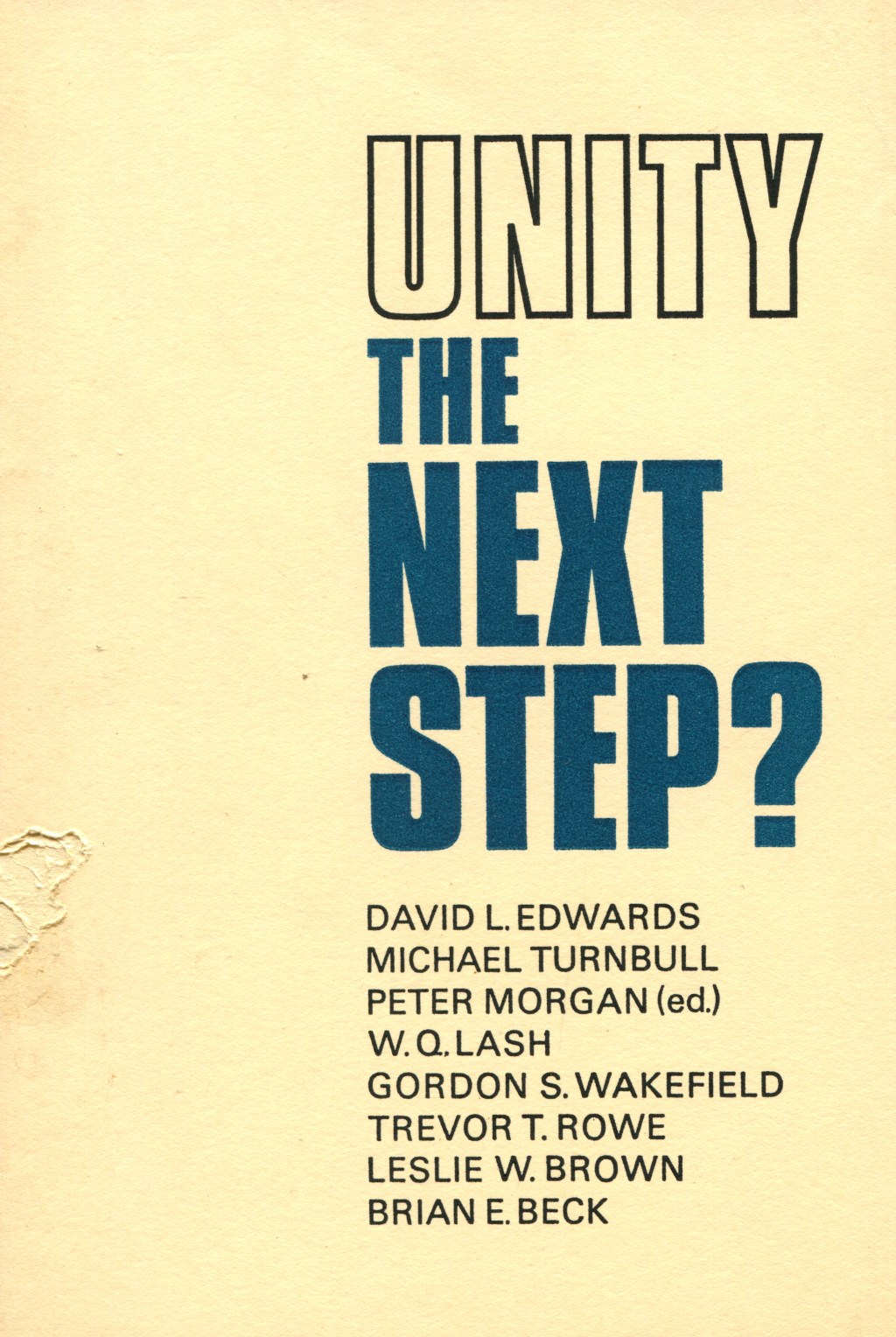
DAMUC/PUB1/1. Books on the subject of Church Union

On Thursday 29 November 2018 the Centre will host a conference exploring aspects of the Anglican-Methodist Union conversations from the 1960s until rejection by the Church of England in 1972. Subsequently, the conversations continued until the two churches signed a Covenant in 2002. The conference will exploit the rich archive collections relating to the discussions held at the Oxford Centre for Methodism and Church History, Oxford Brookes University.

The full programme is as follows:

Oxford Centre for Methodism and Church History
Thursday 29 November 2018
ANGLICAN-METHODIST UNION CONVERSATIONS

Programme:

9.45 arrivals, coffee, welcome

10.00-10.45

Pippa Catterall, University of Westminster: Ambiguity and Ecumenism: Studied Ambiguity in the Anglican-Methodist Conversations

10.45-11.00 break

11.00-12.30

Robert Bates, Oxford Brookes University: Another Kirchenkampf? Episodes from the life of Franz Hildebrandt.

Peter Howson: hon fellow, Oxford Brookes University: Working Outside the Box: the Disappearing Official Interest in non-local Ministry

Claire Surry: A comparison of two ecumenical initiatives: Methodist Union, 1932 and the Anglican Methodist union conversations.

12.30-1.15 Lunch

1.15-2.45

Phillip Tovey, Diocese of Oxford: The Anglican Methodist Ordinal -its significance and influence

John Lenton, Wesley Historical Society: Analysing Participants and their actions in the Conversations

Jane Platt, Oxford Brookes University: Grass-roots religion and its part in the mid-twentieth-century opposition to Anglican-Methodist Union

2.45-3.15 tea

3.15-4.00

Paul Avis, ‘AMICUM -a report and assessment from a member’

4.00-5.00

Martin Wellings, Wesley Memorial Church: The National Liaison Committee

5.00

Close and conference publication

Categories
Uncategorized

Digital – Methodist Conference Cartoons, 1930s

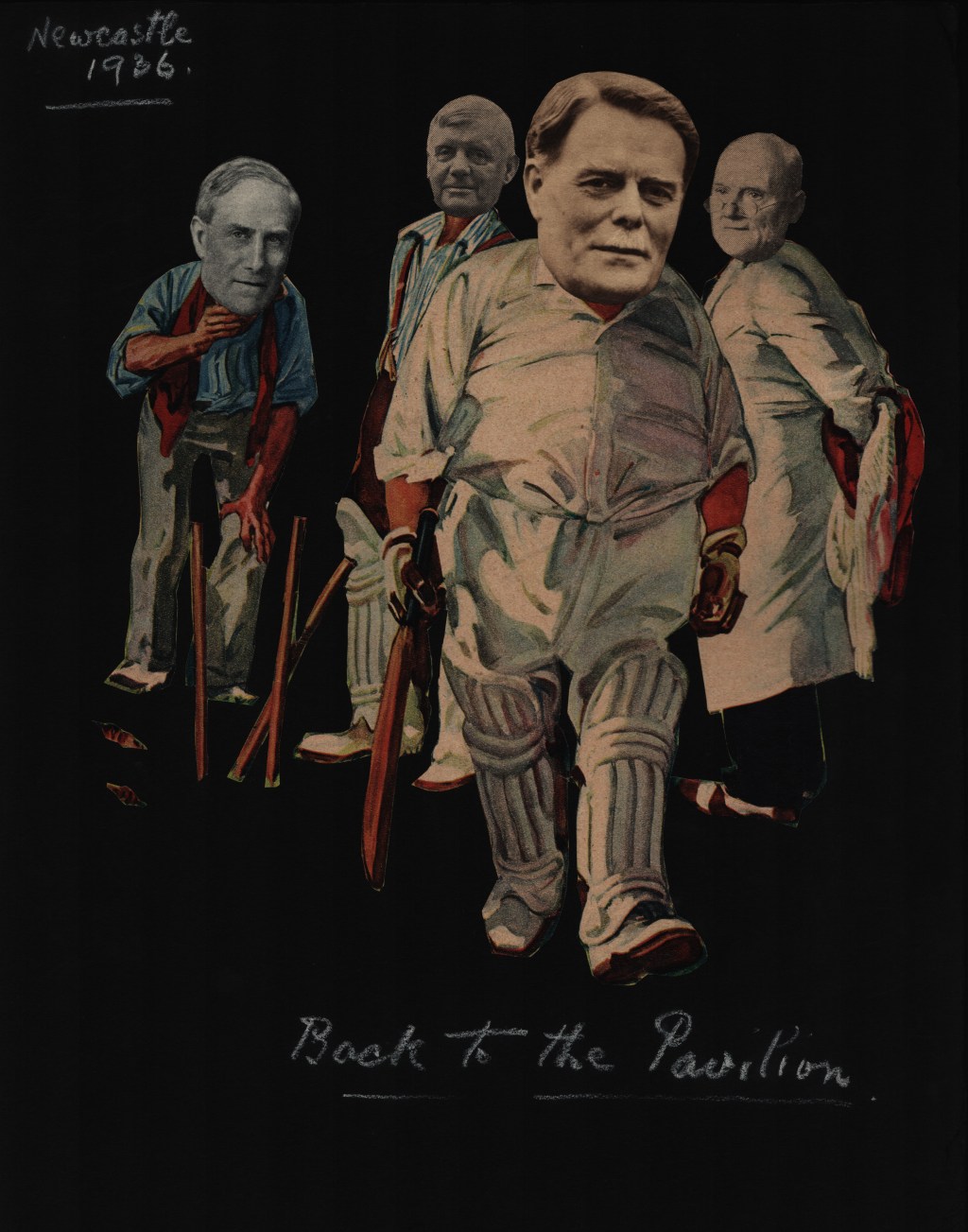
Back To The Pavilion
Back to the Pavilion. 1936.

The 1930s was a high time for British humour. It was the era of Punch, of 1066 And All That, of saucy seaside postcards, of David Low’s Evening Standard political cartoons: against a backdrop of the rise of Fascism, the Depression and mass unemployment, Britain laughed. It lay the foundation for wartime humour, of I.T.M.A., and humorous propaganda (Fougasse’s ‘Careless Talk Costs Lives’ posters).

In 1932, the main Methodist denominations in Britain united, trumpeted then – and still – as one of the most successful of church mergers. Although there were dissidents, they were muted. Yet there must have been many who had mixed feelings: one recorded those in a series of over 100 cartoons, now in the Wesley Historical Society library. Some are merely funny, others more barbed and pointedly satirical. The creator is unknown; it seems he (most likely male) was probably a member of the United Methodist Church (itself a merger of three sub-denominations in 1907), then of the Methodist conference until 1936. At least, the internal evidence on the cartoons suggests attendance at the final U.M.C. conference (Bristol, July 1932): the last is dated 1936.

The cartoons comprise (often political) cuttings from newspapers or magazines, with heads of Methodist personages, also cut from publications, superimposed – and then over-drawn if appropriate – and re-captioned. They are mounted on black paper, making them highly visual.

Seems to have forgotten
Seems to have forgotten about me. 1933.

They raise all manner of questions: who created them? Were they intended for an audience, and if so, who; or simply for personal pleasure? While many of the Methodist individuals can be identified (such as Presidents or Vice-Presidents of the Conference), many are not so obvious. What were the issues to which the cartoons allude? Where were the original cartoons taken from? One, for instance, from 1933, depicts a Nazi ‘brown shirt’ cudgel raised, with the head of Rev. Dr. Luke Wiseman, incoming President, superimposed. The cudgel (‘Nazism’) is overwritten ‘Presidential Address’ and the (swastika?) armband covered. Nearby are two female figures: ‘Seems to have forgotten about me’ is the caption – women in ministry is a theme of a number of the pieces.

While the cartoons are intriguing in their own right, they open a door to serious research, not only about attitudes to Methodist Union but more broadly about appreciation and use of humour at popular level in society. They hold the potential for contributing to our understanding of grass-roots culture at a time of crisis, perhaps not altogether unlike today.

Dr Peter Forsaith is Research Fellow at the OCMCH. The complete series of Methodist Conference Cartoons form part of the Centre’s digital collections which will be available soon.

Categories
Uncategorized

People – New Appointments

In September 2018, two new appointments were made at the OCMCH.

Public Engagement Officer – Daniel Reed

13707695_1966372470255796_2469552106744852174_n

Daniel has ten years’ professional experience in regional archives services, and was previously Assistant Archivist at the OCMCH. Having graduated from the University of Hull in 2008, Daniel is currently studying towards a PhD in History at Oxford Brookes University. His published research includes studies of early regional newspapers in Britain, the Anglican Church in the eighteenth-century, and the life and works of the author Laurence Sterne. Daniel was also selected as a Georgian Papers Programme Fellow for 2016-2017.

Digitisation Officer – Thomas Dobson

43404280_1740120226097219_8166497270980673536_n - Copy

Also joining the team is Thomas Dobson, who will be working on our upcoming digital collections. Thomas graduated in History from UWTSD Lampeter in July 2018. There, he organised an exhibit on the history of Welsh rugby, and presented a paper on the importance of medieval churches in the modern world.

Daniel and Thomas will be working with other Centre staff to bring the historical collections of the OCMCH to wider attention, and make these valuable research resources more accessible to our users.

Categories
Uncategorized

Fellows – Megan Gibson, Visiting Research Fellow 2018-2019

Megan Gibson 2018

Megan Gibson, visiting research fellow in the Oxford Centre for Methodism and Church History for 2017-18, writes of her research for the year;

During my fellowship, I will be conducting research supporting a chapter from my dissertation: “Celebrity and Devotion in Eighteenth-Century Britain,” which examines the intersections between religious and secular forms of devotion in popular responses to several types of celebrities—the famous actress Sarah Siddons; the literary characters of Pamela and Clarissa, who took on a life of their own outside of their fictional texts; Jacobite hero Bonnie Prince Charlie; and popular preachers George Whitefield and John Wesley—who are the focus of my research here at the Oxford Centre for Methodism and Church History. Looking at Whitefield and Wesley as religious celebrities, I aim to uncover primary evidence of the influence of celebrity on Methodist devotional practices, illustrating how Methodist devotees perceived themselves in relation to their charismatic religious leaders. Though devotion is tied to religion in obvious ways, and many studies have been conducted on Methodist devotional practices, including hymn singing and writing, heart religion, and the practice of keeping spiritual journals, I hope to uncover traces of devotional activities or impulses that slide into the realm of celebrity devotion as distinct from but related to religious devotion—considering Whitefield and Wesley as celebrity figures who inspire fan reactions of pleasure and desire, beyond purely religious fervour.

I am particularly excited to look at the journals, diaries, poems, spiritual accounts, and other sources in the archives collection, where I hope to discover passages that reflect individual or collective attitudes towards the preachers themselves, traces of perceived intimacy and emotional connection with them as a result of their charismatic preaching, expressions of admiration that concentrate on the person rather than the preacher or theological guide, or a sense of group identity surrounding celebrity devotion to Whitefield or Wesley that is distinct from (but related to) Methodist identities. I am extremely thankful for this fellowship which allows me to conduct research amongst a wealth of sources provided at the OCMCH, and to experience the delights of discovery and deeper understanding that such an opportunity affords.

Categories
Uncategorized

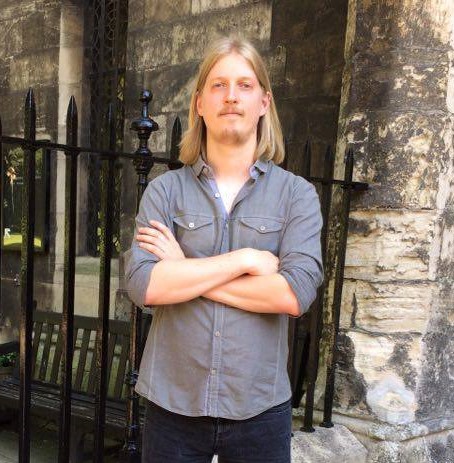
Fellows – Dr Jérôme Grosclaude, Visiting Research Fellow 2017-18

OLYMPUS DIGITAL CAMERA

Dr Jérôme Grosclaude, visiting research fellow in the Oxford Centre for Methodism and Church History for 2017-18, writes of his research for the year;

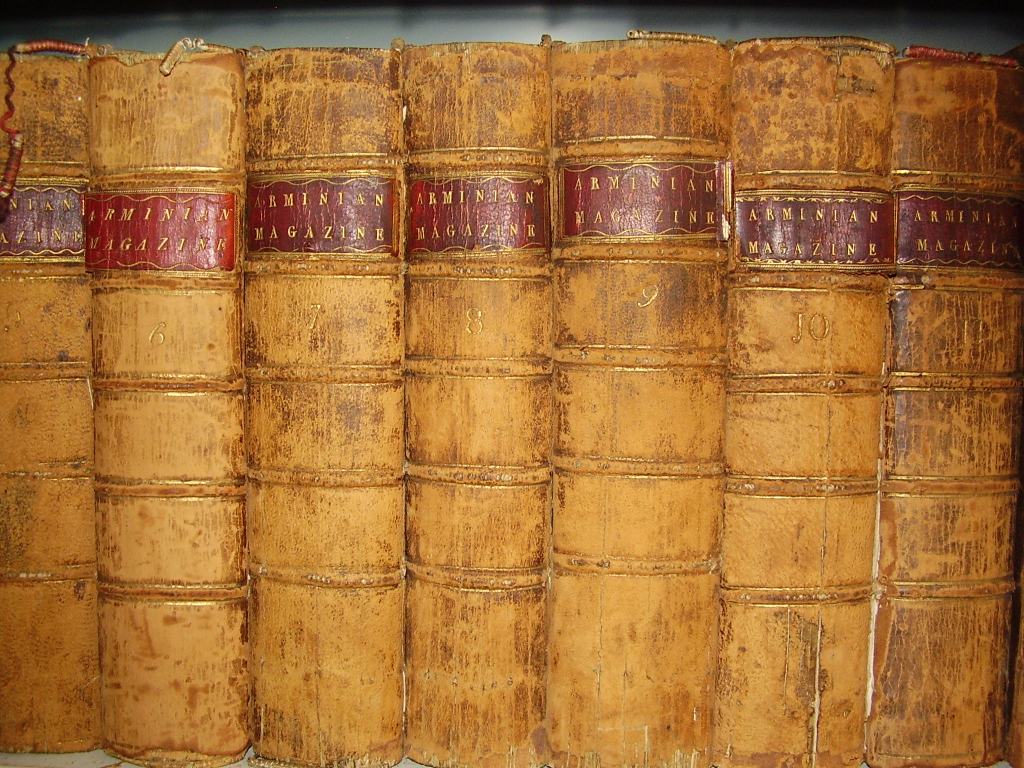
As a French academic working on Modern British Religious History, and more particularly British Methodism, I’m delighted to having been appointed Visiting Research Fellow at the OCMCH for the current academic year. This allows me to study the fascinating conversion narratives published in The Arminian Magazine, of which issues the OCMCH possesses a complete series. These narratives deal with all sorts of men and women, from many walks of life, and represent a very interesting perspective on the first generations of Methodist communities. Most of the narratives were clearly written and published long after the event, which makes interesting contrast between them and other Methodist narratives written immediately afterwards. Furthermore, being edited by John Wesley from its first issue in 1778 to his death in 1791, the first 165 issues of The Arminian Magazine can also give us an indirect idea of John Wesley’s priorities for his movement and its adherents. So my research endeavours to find similarities and dissimilarities between these conversion narratives, in order to distinguish common patterns.

I have been working on British Methodism for more than ten years now. As a doctoral student at Sorbonne-Nouvelle – Paris III University, my thesis dealt with the question of the Ministry in the relations between the Methodists and the Church of England from the death of John Wesley to the 1970s. My association with the OCMCH dates back to 2009, during this research, and continued after I was appointed to my current position as maître de conferences (i. e. Senior Lecturer) at Clermont Auvergne University in 2012. My other main academic interest is the XIXth-century Church of England and the momentous changes it went through during the Georgian and Victorian eras: being in Oxford is thus an opportunity to (literally!) walk in the footsteps of other important figures of British Christianity such as Thomas Arnold and John Keble.

Categories
Uncategorized

Research – New book on prayer in the Early Modern World.

Layout 1
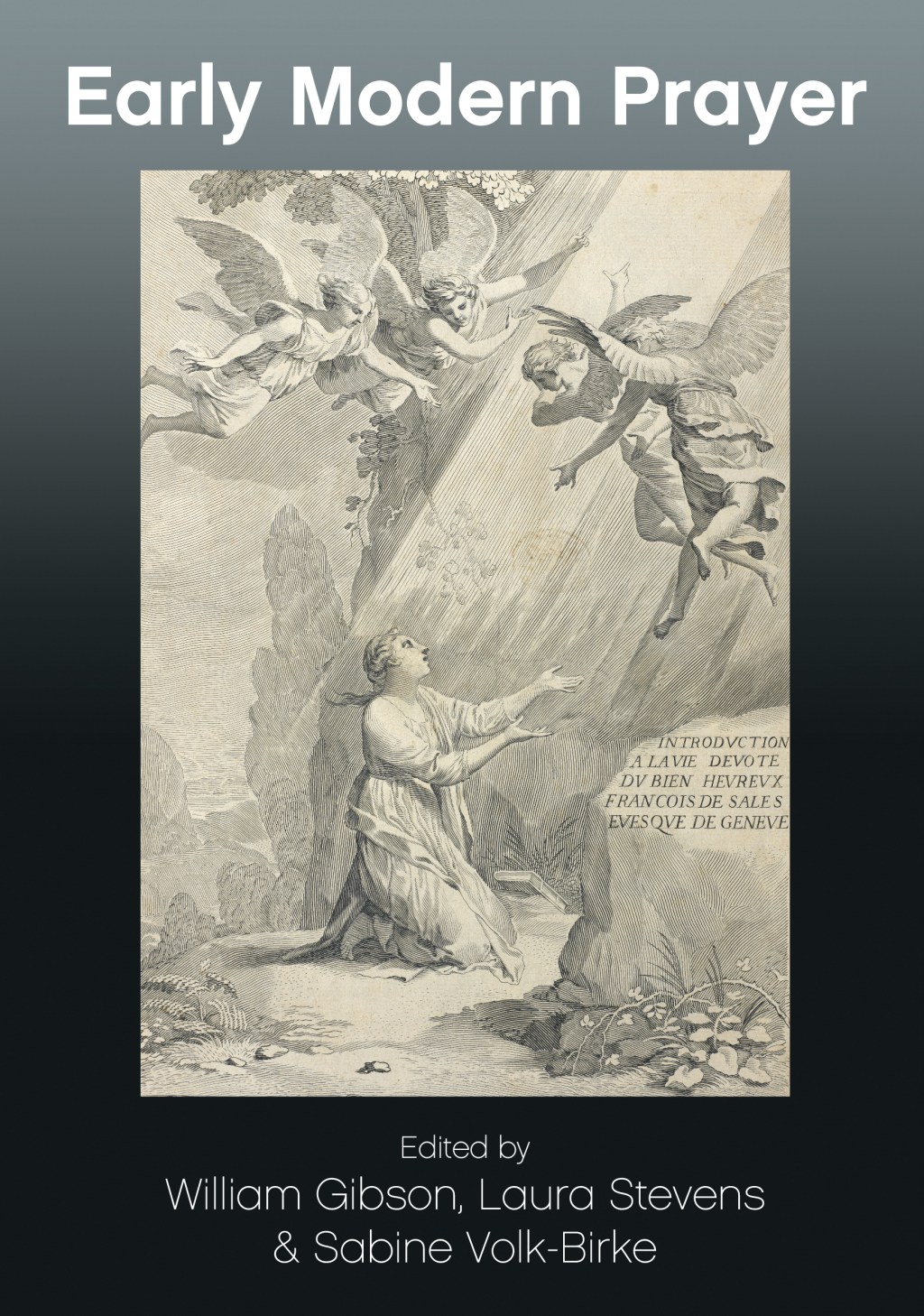
The latest issue of the Journal of Religious History, Literature and Culture, which is edited from the Centre, will be published in November and is a special themed issue on prayer in the Early Modern period.

The essays in this book aim to answer the following questions: What was the place of prayer in the early modern world? What did it look and sound like? Of what aesthetic and political structures did it partake, and how did prayer affect art, literature and politics? How did the activities, expressions and texts we might group under the term prayer serve to bind disparate peoples together, or, in turn, to create friction and fissures within communities? What roles did prayer play in intercultural contact, including violence, conquest and resistance? How can we use the prayers of those centuries (roughly 1500–1800) imprecisely termed the ‘early modern’ era to understand the peoples, polities and cultures of that time?

The essays included in the collection are:

Introduction by William Gibson, Laura M. Stevens and Sabine Volk-Birke.
Denise M. Kohn: ‘Rowlandson’s “Cover Story”: The Revision of Private Devotional Practice into Public Narrative.’
Elena Marasinova: ‘The Prayer of an Empress and the Eighteenth Century Russian Death Penalty Moratorium’
Linda Meditz: ‘The Captive at Prayer: Cross-Cultural Trauma as Revealed in the Diary of Stephen Williams’.
Penny Pritchard: ‘The Eye of a Needle: Commemorating the ‘Godly Merchant’ in the Early Modern Funeral Sermon.’
Laura M. Stevens: ‘Mary’s Magnificat in Eighteenth Century Britain’
Sabine Volk-Birke: ‘“The Order and Methods of Nosegays”: Imagining Readers in François de Sales’s Introduction à la vie dévote (1609) and its eighteenth century English adaptations.’

For information on the version of the special issue as a book see http://www.uwp.co.uk/book/early-modern-prayer-paperback/

Categories
Uncategorized

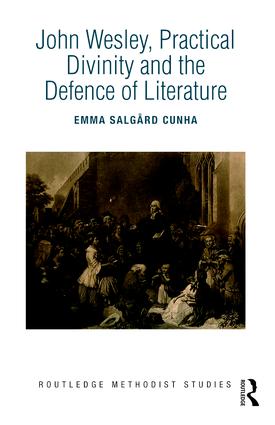
Research – John Wesley, Practical Divinity and the Defence of Literature, by Emma Salgård Cunha

9781138305021
John Wesley (1703-1791), leader of British Methodism, was one of the most prolific literary figures of the eighteenth century, responsible for creating and disseminating a massive corpus of religious literature and for instigating a sophisticated programme of reading, writing and publishing within his Methodist Societies. John Wesley, Practical Divinity and the Defence of Literature takes the influential genre of practical divinity as a framework for understanding Wesley’s role as an author, editor and critic of popular religious writing. It asks why he advocated the literary arts as a valid aspect of his evangelical theology, and how his Christian poetics impacted upon the religious experience of his followers.

Table of Contents

Methodism and the Defence of Literature: An Introduction

1 Methodist Literary Culture: Literacy and Grace

2 Wesley’s Christian Library: Practicality, Controversy and the Methodist Canon

3 Wesley in the Literary Sphere: The Methodist Miscellany

4 Wesleyan Poetics: Practical Divinity and the Function of Literature

5 Negotiating Nonconformity: Practical Divinity and the Politics of Methodist Hymnody

6 Experience, Experiment and Wesley’s Spiritual Autobiography

Conclusion

Emma Salgård Cunha is Lecturer in English at Middlebury College’s Oxford Humanities Program and College Lecturer in Theology at Keble College, Oxford. Her research focuses on the relationship between religion and literature in the long eighteenth century.

Categories
Uncategorized

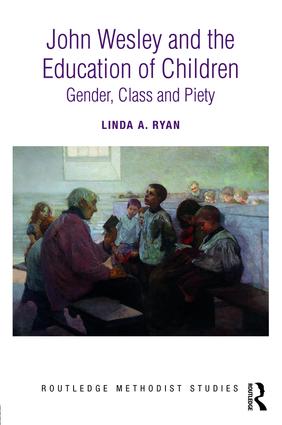
Research – New book on Wesley and Children’s Education by Linda A. Ryan

9781138092365

Scholars have historically associated John Wesley’s educational endeavours with the boarding school he established at Kingswood, near Bristol, in 1746, primarily because of the importance he himself placed on it. Nevertheless, his educational endeavors extended well beyond this single institution, since they were based not just on a desire for academic advancement, but were motivated by individualistic, familial and evangelical considerations. By examining all aspects of his work, this book sets out Wesley’s thinking and practice concerning child-rearing and education, particularly in relation to gender and class, in its broader eighteenth-century social and cultural context.

Drawing on writings from Churchmen, Dissenters, economists, philosophers and reformers as well as educationalists, this study demonstrates that the political, religious and ideological backdrop to Wesley’s work was neither static nor consistent. It also highlights Wesley’s eighteenth-century fellow Evangelicals including Lady Huntingdon, John Fletcher, Hannah More and Robert Raikes to demonstrate whether Wesley’s thinking and practice around schooling was in any way unique.

This study sheds light on the attitude of Wesley and his contemporaries to children, child-rearing, piety and education and demonstrates how Wesley’s attitude to education was influencing and influenced by the society in which he lived and worked. As such, it will not only be useful to academics with an interest in Methodism, but to those interested in broader aspects of eighteenth-century education and schooling, as well as those concerned with attitudes towards children, gender, class, and religiosity.

Dr Linda Ryan was a PhD student in the Oxford Centre for Methodism and Church History and is currently writing an article on teleology and Wesley’s views on childhood.

Categories
Uncategorized

Research – Peter Forsaith on ‘Image, Identity, and John Wesley’

Image, Identity and John Wesley

‘A man in the dark in a picture frame/ So mystic and soulful’

Ultravox, Vienna

More than twenty-five years ago I complained about the state in which the historic pictures in the Museum of Methodism, London, were stored. Little could I have imagined that would eventually result in the kind of comprehensive and critical study of images of John Wesley, which has just been published. What happened was that I was asked to do something about the situation, and the first task was to list what was there. For every portrait of some past worthy there seemed to be yet another of John Wesley, and they all seemed slightly different. My inborn curiosity led me to try to get to the bottom of this; I have ended up researching the area in a way possibly no-one ever has.

The kinds of questions I wanted to ask were – what did artists painting Wesley make of him? Did he pay artists to paint him, or engravers produce prints, and what were his views on art? Did the Methodist movement use his image, and if so, how? Was he as chameleon-like a character as the number and variety of pictures suggest? It’s all in Image, Identity and John Wesley: a study in portraiture which has just been published

https://www.routledge.com/Image-Identity-and-John-Wesley-A-Study-in-Portraiture/Forsaith/p/book/9781138207899

Tracking down images of John Wesley has not been that onerous. As he was a prominent public figure, galleries, museums and private individuals aren’t unaware if they have a picture of him, and often display them. Since many are held in British Methodist Heritage locations, getting to see those has generally been straightforward. Some I have still not seen after 25 years; some have simply disappeared. What has been a challenge is tracking the ‘provenance’, the genealogy, of some pictures. For instance, four copies are known of the first painted portrait, by J.M. Williams (c.1742/3): which dates back to then? None has a history before the mid-19th century. In 2018 it is planned to put the four alongside each other and get some expert opinions as to their age.

Another interesting avenue has been tracking down whether Wesley was painted by Joshua Reynolds, which forms the first chapter of the book (a version was published in 2015 in the British Art Journal). Wesley made two comments to suggest this, and Reynolds had several appointments in 1755 for a ‘Mr Westley’ – but no portrait has ever been known. The conclusion: that Wesley did sit to Reynolds in 1755 but there was no resulting portrait. But as for getting to that conclusion – and why there was no portrait – well, read the book!

Many questions are left unanswered, particularly about Wesley’s attitude to art, or Methodism’s use of his image. Also about the how and why – what, for instance, was behind Nathaniel Hone’s portrait which now hangs in the National Portrait Gallery, London – and what was its previous provenance? If there is a conclusion from the book it is that virtually all images of Wesley are to some extent caricature. And by the way, I should add that the Museum of Methodism store is now well equipped and organised!

Peter Forsaith
Research Fellow