Categories
Uncategorized

Black History Month – the Methodist Church and Historic Links to Transatlantic Slavery

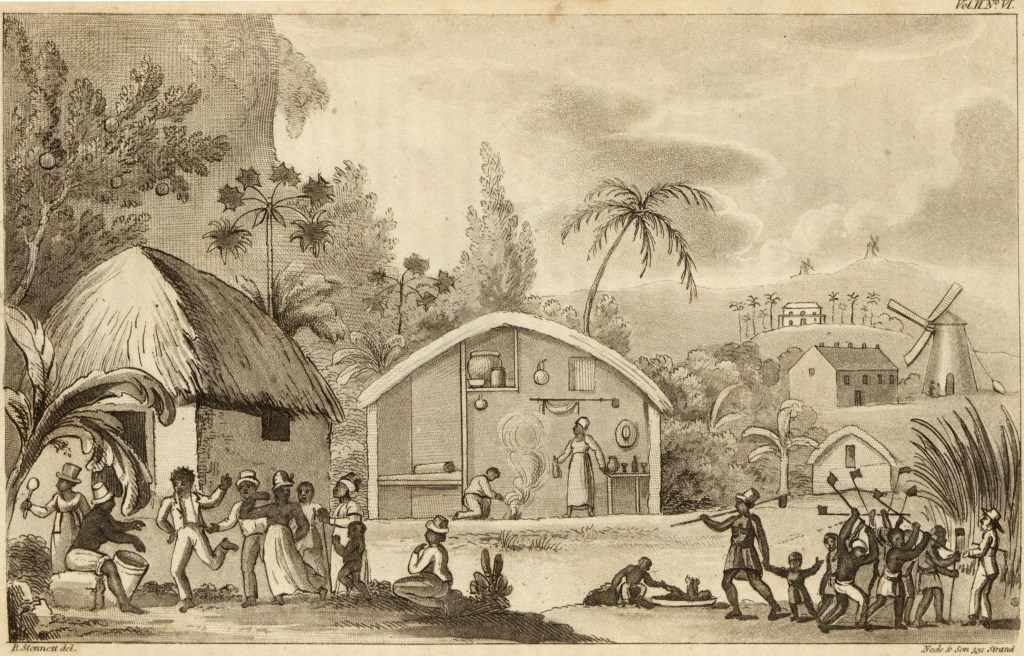
Plantation Scene and Slave Houses, Barbados, 1807-08 (Slavery Images)

Clive Norris, a historian of Methodism who works with the Oxford Centre for Methodism and Church History, has been asked by the Methodist Church of Great Britain to investigate its historic links with the enslavement of Africans.

It is at first sight an odd request, for two reasons.

First, John Wesley (1703-91), who is widely recognised as the founder of Methodism, was an active campaigner for the abolition of enslavement. Lying on his deathbed, he asked a friend to read to him from the autobiography of Olaudah Equiano, formerly an enslaved African himself, a publication to which Wesley had subscribed.[1] And the last of his letters which has survived, written a week before he died, was to fellow-abolitionist William Wilberforce, and urged him to continue his ‘glorious enterprise in opposing that execrable villainy, which is the scandal of religion, of England, and of human nature. . . Go on, in the name of God and in the power of His might, till even American slavery (the vilest that ever saw the sun) shall vanish away before it.’[2] Second, Methodists were typically artisans and other working people; few would have the means to invest in trafficking enslaved Africans or in Caribbean sugar estates. The movement was financed primarily by the regular giving of its members, and the going rate was a mere penny a week, perhaps £5 today.

Olaudah Equiano/Gustavas Vassa, 1791 (Slavery Images)

However, we cannot escape the fact that the transatlantic trade in enslaved Africans was a significant component of the eighteenth-century British economy, comprising as it did the ‘triangular trade’ between Africa, the Americas and the homeland; the extensive production of cotton and other commodities on plantations worked by enslaved Africans; and the many industries in Britain which depended on these activities for their raw materials or markets. Overall it is estimated that ‘economic activities equivalent to around 11% of British GDP were directly involved in or associated with the American plantation complex.’[3] 

One early stronghold of Methodism was Bristol, which was a major port serving the triangular trade. Bristol became involved in the transatlantic trade in enslaved Africans in 1698, when the London-based Royal African Company lost its monopoly of the English trade with West Africa.[4] Between 1698 and 1807 Bristol merchants financed at least 2,060 voyages to Africa merchants, most before 1750;[5] between 1756 and 1786 Bristol sent 588 slave ships to Africa, though the rising port of Liverpool sent 1,858.[6] Between 1698 and 1807 it is estimated that Bristol slaving ships carried some 587,000 abducted Africans to the Americas, of whom 486,000 (82.8 per cent) survived the Atlantic crossing. This represented around one-sixth of the British empire’s slave trade, and Bristol was probably the third largest Atlantic slave port.[7]

The tentacles of the trade reached into every corner of Bristol’s economy. Bristol’s merchants financed the voyages of the ships which abducted thousands of men, women and children from Africa, and took them to the Americas to be worked to death. Bristolians captained the ships and provided their crews. Bristol shipwrights built and maintained the vessels, local dockers manned the port, and local traders furnished the food and other supplies.[8] Bristol coffee houses hosted endless business meetings; local people also worked as builders and tradesmen, servants, and in many other ways to service the slave trade indirectly. And crucially, Bristol banks such as the ’Old Bank’ on George Street financed the slave trade and the wider commercial life of the city. As one historian has observed: ‘In the period of Bristol’s greatest prosperity, few of its citizens did not have some connection, direct or indirect, with slaving ventures.’[9] It seems likely, therefore, that—even if many had principled objections—some of the 750 or so members of Bristol’s Methodist society had links with the trafficking and subsequent exploitation of enslaved Africans, and Clive is exploring this possibility.

Establishing the facts will be challenging but it is of course only part of the story. It immediately prompts the questions: why did people act as they did and how should we respond to that? Take for example, Sir Philip Gibbes (1731-1815), a prominent Barbados slaveholder with Bristol connections. He was widely admired for his piety and humanity. In his autobiography, Equiano described him as ‘a most worthy and humane gentleman’ who ‘saves the lives of his negroes, and keeps them healthy, and as happy as the condition of slavery can admit’.[10] John Wesley counted him as a friend.[11] Gibbes sought to provide for the spiritual welfare of his enslaved workers but only in a strictly limited way. Thus he encouraged the saying of grace before their breakfast (‘bless our labours . . . grant that this present meal may convey to our bodies nourishment and health, and to our minds gratitude and love’); but not before lunch, which would be too disruptive to the working day.[12] Hero or villain? The answer is that the eighteenth century was an age of complexity, contradiction, and confusion, much like our own.


[1] Journal and Diaries VII (1787-1791) [vol. 24 of The Works of John Wesley], ed. W. Reginald Ward and Richard P. Heitzenrater (Nashville, TN: Abingdon Press, 2003), 348. 

[2] John Wesley to William Wilberforce (24 February 1791), The Letters of the Rev. John Wesley, A.M., ed. John Telford, 8 vols (London: Epworth Press, 1931), VIII:265.

[3] Klas Rönnbäck, “On the economic importance of the slave plantation complex to the British economy during the eighteenth century: a value-added approach,” Journal of Global History 13 (2018), 327.

[4] David Richardson, The Bristol Slave Traders: a collective portrait (Bristol: Historical Association, Bristol Branch, 1985), 1.

[5] David Richardson, “Slavery and Bristol’s ‘golden age’,” Slavery & Abolition 26, no. 1 (2005), 36.

[6] C. M. MacInnes, Bristol and the Slave Trade (Bristol: Historical Association, Bristol Branch, 1968), 6.

[7] Richardson, ‘Slavery and Bristol’, 36, 38.

[8] Richard B. Sheridan, “The Commercial and Financial Organization of the British Slave Trade, 1750-1807,” Economic History Review New Series, Vol. 11, no. 2 (1958), 249. There was a trend over time for enslaved Africans increasingly to be sold on credit; the slavers returned home in ballast, while the planters marketed their sugar and tobacco directly; ibid., 252.

[9] C. Duncan Rice, The Rise and Fall of Black Slavery (London and Basingstoke, 1975), 131.

[10] Olaudah Equiano, The Interesting Narrative of the Life of Olaudah Equiano, or Gustavus Vassa, the African. Written by Himself, Fourth Edition, Enlarged, 2 vols. (London: Printed for, and sold by the Author, 1789), I:210.

[11] John A. Vickers, ‘The Gibbes Family of Hilton Park: an unpublished correspondence of John Wesley’, Methodist History, vol. 4 (1968), 43-61. 

[12] Philip Gibbes, Instructions for the Treatment of Negroes (London: Shepperson and Reynolds, 1786, reprinted with additions 1797), 79-81.

Categories
Uncategorized

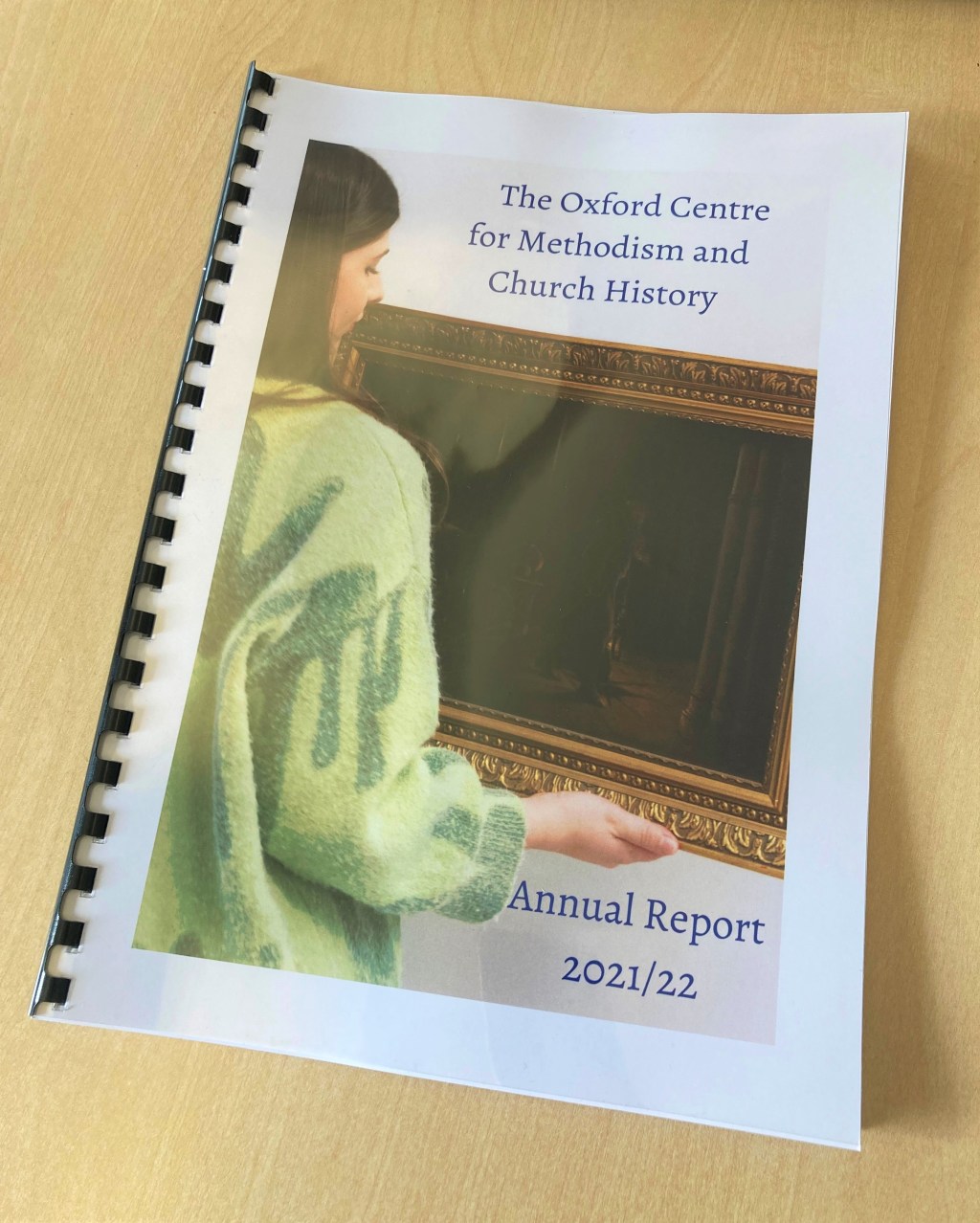
Centre – OCMCH Annual Report 2021/22

The Centre has published its Annual report for 2021-22 – an acknowledgement and celebration of our achievements over the past twelve months. OCMCH Director, Professor William Gibson, had the following to say about the Centre’s work over the last year,

2021-22 has been another productive year for the Centre. The Coronavirus Pandemic has continued to have an impact on our working practices; and on the types of outputs we are able to achieve. In spite of this, 2021-22 has also been an extremely successful year for the Centre. We have been able to host, organise, and attend both online and in-person events; return to primarily working on-campus; and engage with others as part of work with individuals and visiting groups. We have been able to welcome readers back to our Reading Room, and also to visit other archives and heritage sites as part of our wider work and research.

The Centre continues to work with an increasing number of external partners, ranging in involvement from The Methodist Church and The Westminster Society; to The Manchester Wesley Research Centre and Wesley House, Cambridge; and newer partnerships, such as with The Methodist Insurance Company, and Southlands College (University of Roehampton). We have continued to work with, and to support, our collection owners, working closely with the Avec Consultancy Trust regarding the development of their archive; with the Methodist Philatelic Society over the deposit of their collection, and financing of a new bursary; and, as ever, with the Wesley Historical Society, with a focus on the growth and development of their collections and space allocation, particularly at this time of transition for the Society.

Digitisation and online engagement continued to play an extensive, and growing, role in our work this past year – with almost 2,000 additional items now available online, and over 1 million views have now been achieved across our online collections.

This Report serves to illustrate much of the hard work completed by the Centre this past year, and also the impressive impact this is having – particularly in an increasingly digital field.

You can download a digital version of the full Annual Report, here.

Categories
Uncategorized

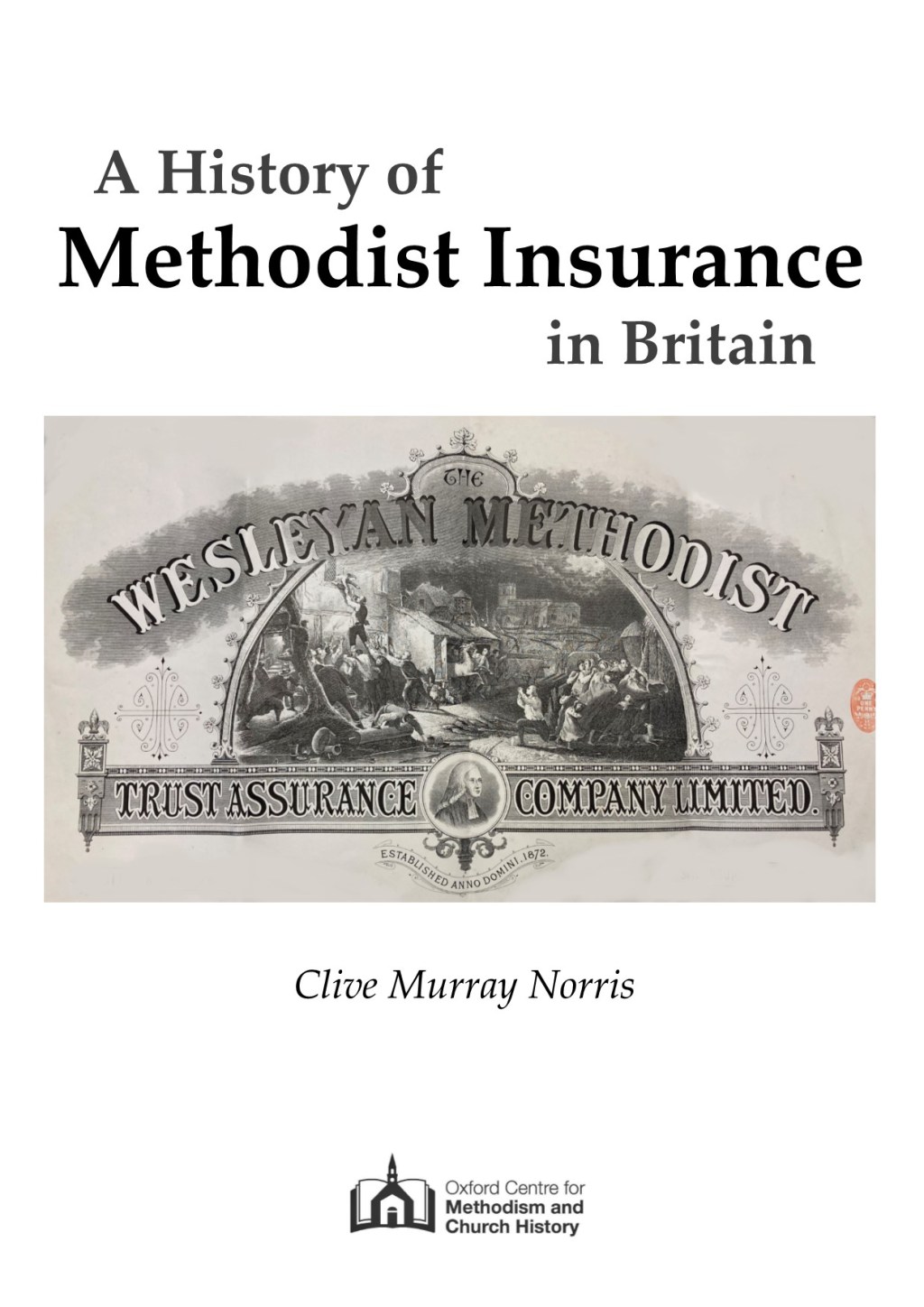
Publication – A History of Methodist Insurance in Britain by Clive Norris

The Centre is delighted to announce the publication of A History of Methodist Insurance in Britain by Clive Norris. The production of this book coincides with the one hundred and fiftieth anniversary of the foundation of the Methodist Insurance Company, and it tells the story of how Methodists acted, from the earliest days, to protect their chapels and other buildings from fire and other risks.

After several failed attempts in the first half of the nineteenth century, the various strands of British Methodism, including the Primitive Methodists (1866) and the Wesleyans (1872), established property insurance concerns, financed by leading lay members and managed jointly by businesspeople and clergy. These protected an expanding nationwide network of chapels and schools, and provided crucial underpinning for the movement’s mission of spreading the gospel and delivering educational, welfare and social services.

The narrative encompasses an era of wrenching social change, two World Wars, and a technological revolution, but the purpose, ethos and daily operation of today’s Methodist Insurance Company would look familiar to the pioneers of one and fifty years ago.

This book from OCMCH Publications is available in both hardback and paperback. Order your copy now by following this link.

Categories
Uncategorized

Publication – latest title from OCMCH Reprints

Today sees the publication of the second title from OCMCH Reprints, a series of publications which draws on the historical collections of the Oxford Centre for Methodism and Church History to provide high quality reproductions of out-of-copyright books that are scarce, inaccessible, or otherwise unavailable in digital formats elsewhere.

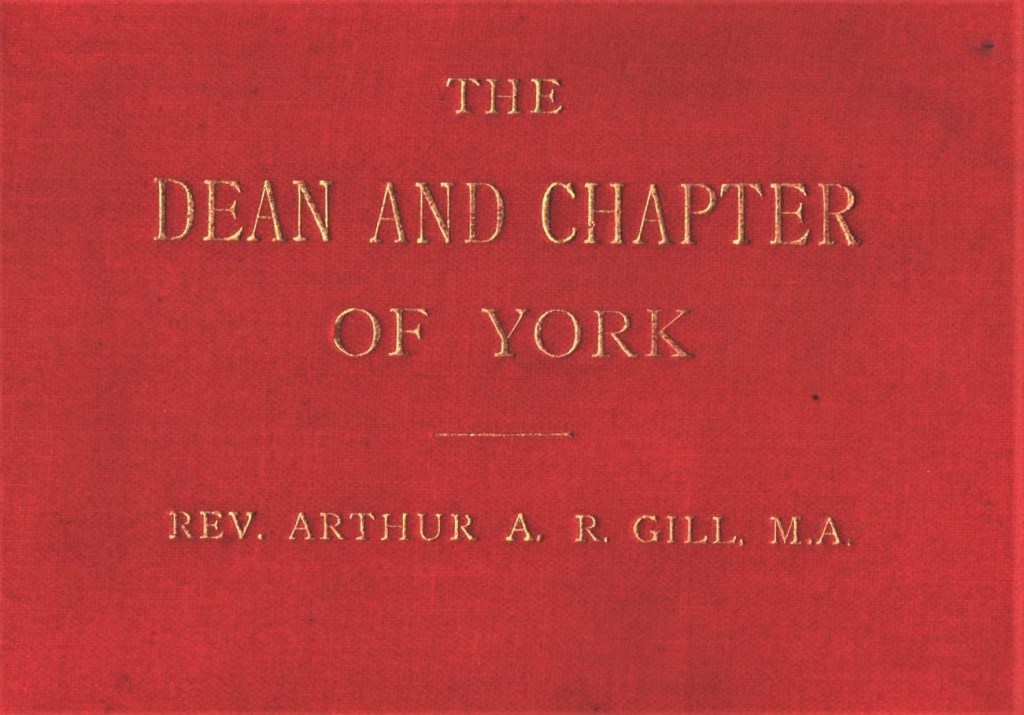
This reprint volume compiles two works by the Rev. Arthur A. R. Gill (1868-1937); The Archdeacons of the Diocese of York, and The Dean and Chapter of York, both originally published in 1915 and long since out of print.

A native of Devon, these works were compiled when Gill was vicar of Market Weighton in the East Riding of Yorkshire, a living he held from 1910 to 1925. He was subsequently appointed to All Saints, Pavement, and St. Saviours in York, and he was made a canon of the cathedral there in 1932. Gill’s historical interests found outlets through his membership of the Yorkshire Archaeological Society, and he was a contributor to the East Riding Antiquarian Society’s transactions. His writings are now preserved in York Minster Archives.

The works presented here represent an early attempt to compile an authoritative list of the dignitaries of the cathedral of York, occasionally peppered with Gill’s characteristic remarks. Against the entry for the last Treasurer of York (the post was dissolved under Henry VIII), he notes that ‘as the Treasures had been filched, there was no need for a Treasurer’.

The volumes were originally published by St. William’s Press in Market Weighton, the printing works of local the Catholic Reformatory School. In the 1890s, the boys of the school produced over a million pamphlets a year from their presses.

‘The Archdeacons of the Diocese of York; with, The Dean and Chapter of York’ is available now to purchase in paperback and hardback. Click here to order.

Categories
Uncategorized

Research – Seely and Paget project newsletter

Alongside English Heritage and other partners, Dr Peter Forsaith and Tom Dobson of the OCMCH are leading on a project to celebrate the centenary of Seely and Paget, architects. From the 1920s to the 1960s, the partnership of John Seely (later 2nd Baron Mottistone) and Paul Paget was notable for their close personal relationship as well as for their architectural work. Their melding of traditional and new styles and materials was already becoming unfashionable at the time, and was eclipsed by the modernity of the 1960s onwards. This work is now being re-evaluated, however, including viewing them as early practitioners of conservation architecture. 2026 marks the 100th anniversary of the partnership’s registration with R.I.B.A., and will be a focal point for many of the project’s outcomes.

Download the project newsletter, now:

Seely and Paget, Architects – issue 1 (March 2022)
Seely and Paget, Architects – issue 2 (September 2022)

Categories
Uncategorized

Women’s History Month – Rev Miriam Moul Reflects on Women in Ministry

Rev Miriam Moul at Westminster Chapel, Harcourt Hill

As Methodist Ministers often do, I’d like to begin with a quote from one of Charles Wesley’s well-known hymns – O thou who camest from above. Wesley writes ‘Jesus, confirm my heart’s desire to work and speak and think for thee. Still let me guard the holy fire and still stir up thy gift in me.’

As a female Methodist Minister, I’m often struck by the stories of those female ‘pioneers’ within Methodism. From the great Susanna Wesley to today’s presbyteral and diaconal colleagues, all have sought to ‘guard the holy fire’ and through working, speaking, and thinking for Jesus, have used their gifts in innumerable ways. They have sought to fulfil their callings to serve God and the people called Methodists. Amidst many and varied obstacles within the patriarchal system these women stepped forward, pioneering a way for those like me in the future.

So to my story: I grew up on the Isle of Wight, and didn’t encounter a female Minister until my early 20s. Growing up week by week in my local Methodist Church, I heard women preach and teach as Local Preachers. Seeing women leading worship was a common experience for me, part of what was normal at church. Yet that didn’t extend to female Ministers. In my consciousness churches were led by men. I knew that there were women ministers, but the lack of a visible female leader in my own context was stark. My main frame of reference was watching reruns of The Vicar of Dibley, seeing many of the humorous scenarios that Geraldine Granger experienced, and the genuine discrimination she faced. Encountering my first female minister opened for me a new way of seeing my burgeoning sense of call to ministry. Ordained ministry had always seemed beyond the realm of possibility, until I saw someone like me, in a collar, presiding at the sacraments, pastorally caring, leading. Suddenly there appeared a role model, someone who made me believe that what I felt called to might actually be possible.

After two years at The Queen’s Foundation in Birmingham, I entered the itinerant ministry as a Probationer Presbyter in 2015, more than 40 years after women were first ordained as Presbyters (Ministers) in the Methodist Church. Much has changed, and for the better, I’m certain. My Methodist cohort in training was approximately 80% female, most of whom were coming from established careers and having had families. In my probationer’s appointment in Kent, I was the first woman presbyter that one of the churches I served had experienced. As a woman, both young and single, I think there was some scepticism about the new ‘young lady minister.’ Some Vicar of Dibley-like moments materialised as I was introduced to the local community. These included multiple invitations to Christmas dinner in my first year – I only accepted one and there was not a Brussel sprout in sight! I could never tell whether being described as a ‘breath of fresh air’ was a positive thing or whether ‘you’re not much like your predecessor’ had any loaded meaning other than, ‘you’re not a middle-aged man.’ The public perception of clergy as male, white, middle-aged, middle-class, is reinforced in television and film and throughout the media. There is still work to be done in challenging this perception.

The Methodist Church has come far in its journey towards gender equality, but it is vital to recognise how far we have yet to travel towards full inclusion of God’s diverse and beautiful humanity. Throughout generations of Methodism, women have had to prove that they were not only as good at preaching as men, but better, in order to be valued. Women in ministry have had to weather the storms of overt and casual sexism. Women have faced many obstacles to being fully valued as Ministers in their own right, rather than supporting players. In early Methodism, female preaching was seen as disruptive, perhaps it is time to redouble our efforts to again disrupt the accepted order in seeking justice and solidarity for all. Not only gender equality, but for all those who continue to be underrepresented in the life of the church, whose voices and experiences have been silenced, people of colour, those who live with disabilities, those who live with mental health issues, those who belong to the LGBTQ+ community and many more.

To conclude I’d like to share one of many positive and joyful stories of my own ministry in the Methodist Church. I had led a large funeral for a much loved member of a village community. People from across the village and the wider town community had attended. After the service I was ‘working the room’ chatting to people. A rather strident looking gentleman approached and said “I’m a Catholic.” Immediately I wondered where this conversation was going to go. I felt my defences rise as I waited for the next sentence. To my utter surprise, the next words uttered were “If all women ministers are like you, I must write to the Pope and tell him we need to ordain women.”  I remember standing open-mouthed for what felt like minutes. To have my ministry valued by someone who would traditionally have opposed it because of my gender was an experience I’ll never forget.

I hope that in the years to come we will continue working towards gender equality and the full inclusion of all peoples in the life of the Church, that all who feel called as beloved children of God, will be able to work, speak and think for Jesus.   

Rev Miriam Moul

Miriam is Methodist Chaplain in the Multifaith Chaplaincy Team at Oxford Brookes University. For more information about International Women’s Day at Brookes, click here.

Categories
Uncategorized

Women’s History Month – Margaret Birchall, Southlands College student in the early 1870s

In 1873, Margaret Birchall received the news that she had been placed 86th in the 1st Class in the results of the Queen’s Scholarship Examination.[1] After a five-year apprenticeship as a pupil-teacher at the Windsor Street Wesleyan and Sunday School, Toxteth, Liverpool, the results of this examination qualified her to take up a place at a teacher training college on a grant if her circumstances allowed.[2] They clearly did, as she was also informed that she should enter Southlands College on 7 February, where she studied between 1873 and 1874.

Windsor Street Wesleyan and Sunday School, Toxteth, Liverpool (photo credit: Helen Watt)

Born in 1852, Margaret was the daughter of James Birchall, who ended his time working for the London and North-Western Railway as Outdoor Superintendent of the Goods Station, Park Lane, Liverpool, and his second wife, Margaret, née Sayer. It is not known when the family had become members of the Methodist Church, but they had certainly done so by 1850, when the couple’s second-eldest daughter was baptised in the local Wesleyan Methodist Chapel.[3]

Hudson Family Collection. Postcard of Southlands College, Battersea, 19th cent.

Therefore, it was probably only natural that Margaret should attend Southlands Training College, founded on 26 February 1872 only around a year before her entrance, as a Methodist teacher training college for women.[4] As the college was then in Battersea, it must have been a big step to travel from Liverpool to London to take up her place.

Westminster College Archives. Wesleyan Education Committee register of teachers (extract, 1873)

Nevertheless, it so happened that John Newton Hudson (1853-1933), a fellow pupil-teacher in Liverpool and her future husband, had been appointed Second Master at Kentish Town Wesleyan School in 1871. He was to stay there until 1874, so that the couple were in London at the same time while she was at college. Also, it is clear that her time at Southlands must have been very important to her, as she kept several items relating to her course and companions there.[5] These include her books of lecture notes on Theology; Domestic Economy, and Paraphrase, as well as books of maps relating to the British Isles and the world, extremely carefully produced, with accompanying details.

Hudson Family Collection. World geography exercise book, 1874 (OCMCH Digital Collections)

Besides these, she retained her ‘Friendship’ Album, containing many inscriptions and drawings by fellow students, including an entry by Rev. G. W. Olver, Principal of Southlands College. Besides a picture of Rev. Olver given to Margaret in 1874, her family photograph album contains many carte de visite-style photographs of young women, probably also dating from the 1870s. Since many were taken at the London Stereoscopic and Photographic Company, which had studios in Regent Street and Cheapside, these images may prove to be portraits of some of those fellow students.

Photograph of the Rev. G. W. Olver, c1874 (OCMCH Digital Collections)

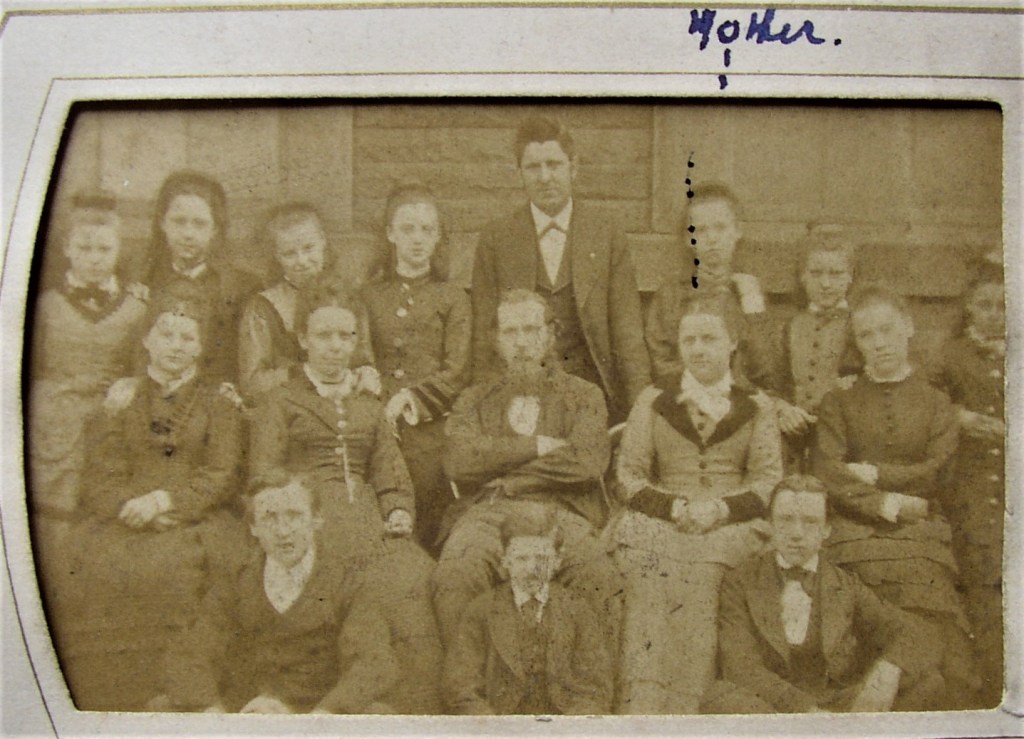
After finishing her training in London, Margaret returned to the north-west. By December 1874, she had passed her probation as a teacher at Mount Pleasant Wesleyan Infant School, Bacup, near Rochdale in Lancashire, and was headmistress there for more than two years.[6] Another family photograph album includes a picture of her, identified by her daughter, Marian Hudson (also a teacher), in a group portrait, perhaps dating from that her time.

Group photograph including Margaret Birchall, c1870s (photo credit: Helen Watt)

While she was still teaching, Margaret kept a diary with entries dating between 1876 and 1877.[7] From these notes, we gain an impression of her life as a teacher, including her satisfaction that ‘all my girls got excellent again’ (entry for 4 February 1877) and her growing relationship with John. We can also see something of her spiritual development, showing perhaps how hard she was on herself in trying to live an upright, Christian life. Also mentioned in the diary are various family members, including her parents and all but one of her sisters: Sarah; Mary; Caroline (Carrie), and Alice, as well as John’s step-sister, Annie Reynolds.

Margaret Birchall Diary, 1876-7 (OCMCH Digital Collections)

However, a connection with Southlands College also appears, as the last note (entry for 5 February 1877) records receiving a postcard for her birthday (the previous October) from Rev. Olver, with a touching reference from the Bible to Numbers VI, 24; 26 (‘The Lord bless thee, and keep thee:’ and ‘The Lord lift up his countenance upon thee, and give thee peace.’).

The diary also notes that Margaret covenanted at Mount Pleasant Wesleyan Chapel in Bacup in 1877. After her marriage to John in April of that year, Bacup is where they made their first home, with John as Headmaster of Bacup Britannia Wesleyan School for the first eleven years of their time there.

Postcard of Mount Pleasant Wesleyan Chapel, Bacup, Lancashire, 19th cent. (photo credit: Helen Watt)

On her marriage, Margaret did not entirely give up teaching, as she taught women in the Sunday School at Mount Pleasant, and was also at one time or another a Junior Class Leader; member of the Leaders’ Meeting; Bacup Circuit Stewardess, and member of the War Relief Committee during the First World War.[8] She may also have kept in touch with at least one friend from Southlands, as can be seen in a letter received from her in 1888.[9]

Hudson family group photograph, 1927 (photo credit: Helen Watt)

Except for a few years in Padiham, Margaret and John continued to live in Bacup with their growing family for a further period until John’s retirement in the early 1920s. They then moved to Manchester where they can been seen in a family photograph taken to celebrate their Golden Wedding Anniversary in 1927. They are surrounded by their five surviving children, three of whom were also teachers, and the remaining two, a Methodist Minister and a doctor respectively. Also present were their two daughters-in-law, one of whom had also been a teacher, and their four young grandchildren. Later, these children would include a Methodist Minister; a Methodist Missionary in China, and a piano teacher. Sadly, Margaret died of a stroke a few months after the anniversary. Although an enduring memory of her was that ‘her influence was always on the side of righteousness’, as Mrs Hudson, she was also remembered with respect and affection in the Bacup Circuit as well as in the town.[10]

Helen Watt, February 2022


[1] Now part of the Hudson Family Collection at the OCMCH.

[2] Jenny Keating, ‘Teacher training – up to the 1960s’, History in Education Project, Institute of Historical Research, University of London, December 2010, available via the website of the IHR web archives https://archives.history.ac.uk/history-in-education/ (accessed 19 Feb 2022).

[3] Baptism of Mary Birchall, 29 December 1850, in the records of Mount Pleasant Wesleyan Methodist Church/Pitt Street Wesleyan Methodist Church, available at https://www.findmypast.co.uk/transcript?id=PRS%2FLIVERPOOL%2FBAP%2F1062357 (accessed 19 Feb 2022).

[4] See the history of the college, available at https://www.roehampton.ac.uk/colleges/southlands-college/history/ (accessed 19 Feb 2022).

[5] Now part of the Hudson Family Collection at the OCMCH.

[6] Parchment certificate of Margaret Birchall in the Hudson Family Collection; Obituary, Mrs Hudson (née Maggie Birchall), 1873-74, from the dates, perhaps in a publication of Southlands College.

[7] Also preserved among the family papers, with later entries by Marian Hudson dating from 1966.

[8] Obituary.

[9] Now part of the Hudson Family Collection at the OCMCH.

[10] Ibid.

The Hudson Family Collection is currently being catalogued and at the Centre. Some items from this collection can be accessed online at OCMCH Digital Collections. For more information about International Women’s Day at Oxford Brookes University, click here.

Categories
Uncategorized

Archives & Library – “Long may She Reign”: Westminster College and its relationship with Royalty 

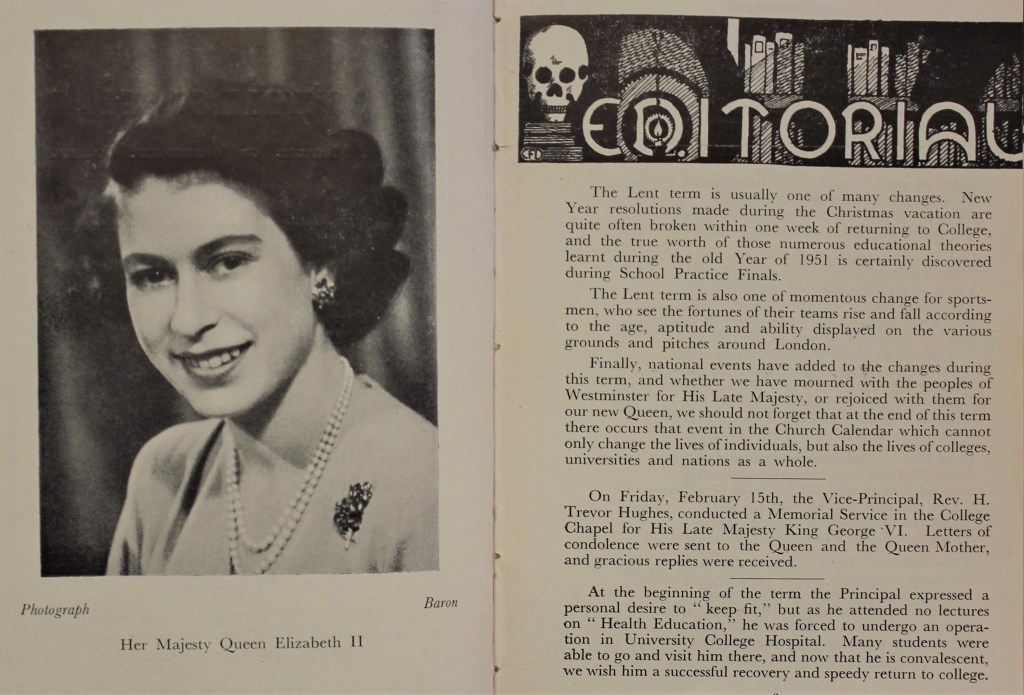
On 6 February 1952, HRH Princess Elizabeth was proclaimed as Elizabeth II: Queen of Great Britain, its remaining Empire, and the rapidly growing Commonwealth. Westminster College, located as it was in the heart of London, was within earshot of the tolling of Big Ben as part of the King’s funerary procession on the 15th of the month, just nine days later. This February marks seventy years since the Queen’s accession to the throne, and the start of her Platinum Jubilee year. To mark this occasion, we explore the relationship between Westminster College and royalty which, throughout its operation, saw the rule of six monarchs from Queen Victoria to Elizabeth II.

Westminster College first opened its doors at 130 Horseferry Road in October 1851: the year of the Great Exhibition. Writing in The Westminsterian in 1947, one student records that its gatehouse was ‘carved with the Imperial Initials’ of Queen Victoria, physically reminding all students of Westminster who was on the throne when the College was established. These same students later lined the street outside the main gates in a symbol of respect following her death in 1901.

The next reference to royalty in the College archive can be found in the logbooks of Principal H. B. Workman, who records the coronation of George V in June 1911, and its surrounding holiday, in his reflections on that term (above, left). According to College legend, George V later visited Horseferry Road during the First World War. Unfortunately for those who like to shroud the College history in glory, this was to visit the Australian forces stationed at the College during the First World War (above, right), rather than to visit the educational institution whose buildings were situated there.  

Throughout the next half century, relations with the royal family continued to be peripheral, with events throughout the city, but never inside the College walls. John Bridge (later one of Westminster’s most famous alumni), noted that royal events were among some of the most memorable for his time at College, remarking that the ‘period 1934-38 was noteworthy for the number of important Royal events – the 1935 Jubilee celebrations, the Royal Wedding and the King’s funeral.’ The coronation of George VI touched the College similarly – its rear quad was utilised as a car park, presumably because of its closeness to Westminster Abbey.  

The one and only visit by a member of the royal family to Westminster College occurred in 1951, when Princess Elizabeth visited as part of the College centenary programme. As she arrived, the College flag was lowered, and the Royal Standard was raised. The Princess then addressed gathered crowds in the quad before touring the buildings, and meeting some members of staff. In her speech, the Princess commented on the fact that the Wesleyan Methodist Church had chosen to establish the College in a ‘poor and destitute area’, where there was ‘many uncared for children in need of teaching’ rather than in a location which carried an ‘atmosphere of academic calm’, as would have been expected. The Princess’ visit concluded with a rendition of the College Yell – something that is said to have shocked/surprised/scared her, depending on who you believe.  

Upon the death of George VI in 1952, Dennis Andrew (President of the Union Society) wrote a letter of condolence on behalf of the students, and a swift response was received, signed by Colonel Martin Charteris. Report of the accession of Elizabeth also featured in the Lent 1952 edition of The Westminsterian, followed by a full page photograph of the new Queen (top of page). Her coronation the following June received a similarly large entry, if only because the College students lined the streets surrounding their buildings and (once again) performed the ‘College Yell’, and were mistaken for the boys of Westminster School!  

When Westminster College relocated to Oxford in 1959, they tried to recruit a member of the royal family to attend its official opening on 21 May 1960 – asking first for The Queen, then the Duke of Edinburgh. The organisers were told first that The Queen could not visit the same institution twice so closely together – even if one visit had been prior to her ascension and to different buildings. The Duke of Edinburgh was apparently busy on the selected date. Despite this, a toast was made to the monarch at the end of lunch, with the menu cards simply noting ‘The Queen’.  

Prior to its merger with Oxford Brookes University in 2000, the only other significant royal event was that of the Queen’s Silver Jubilee in 1977. The College, now devoid of the lively atmosphere of London, did not line the streets and make such a noise that it was reported in national newspapers – as was the case for the Coronation. In fact, the only photographs in the College archive for that year are of sports matches and academic events.  

The seventieth anniversary of the Queen’s ascension this week will pass in similar quietness – if only because of the large-scale national events planned for the beginning of June. Despite this, an exhibition of archive material has been curated on campus, as a small marker of this momentous occasion.  

Thomas Dobson is Collections & Digitisation Officer at the OCMCH. The Westminster College logbooks of Principal H. B. Workman are available online, here.

Categories
Uncategorized

LGBTQ+ History Month – Being Gay at Westminster College, 1963-66: Some Reminiscences

I knew I was homosexual (I don’t remember the word ‘gay’ being used at the time) from about the age of twelve. I also knew – mainly from the jokes about ‘poofs’ and ‘queers’ which were commonplace on TV – that there was something shameful about it, so I kept it to myself and never mentioned it to my parents or friends. During my teens I watched as friends and other contemporaries began to form relationships with the opposite sex, listened as they discussed their exploits, and envied the freedom they had to be themselves.

Around the age of fifteen I attended a meeting of the Student Christian Movement at which the subject of homosexuality was discussed and was appalled at some of the comments made. I sat there thinking ‘they’re talking about me’; but I couldn’t bring myself to respond.

I finally came out at the age of seventeen to my closest friend. I was in love with him but was petrified that, if I told him, he wouldn’t want anything more to do with me and might even tell my parents. In the event he was amazing: he said he wasn’t homosexual himself but had no problem with my being gay and was happy to go on being friends. It’s difficult now (fifty-nine years on!) to find words to describe the sense of relief I felt.

Encouraged by my friend’s reaction, and with my course at Westminster soon to begin, I then told the (young) vicar of my parish church and asked him if he thought it was appropriate that I should go into teaching. His response was mixed: on the one hand, he said he could see no reason why I shouldn’t teach; on the other he gave me a series of jobs to do in the church which kept me busy all through the summer holiday and then declared that he had saved me from ‘going queer’.

The College

As a result, I arrived at Westminster in September 1963 still feeling some anxiety. I decided to ask for an appointment to see the Principal – H. Trevor Hughes – to tell him of my concerns about being a homosexual going into teaching. It seems extraordinary to me, now, that I should have done this. But life was different then: gay sex was still illegal, the papers were full of lurid stories about men being arrested in public toilets, and blackmail was rife. So I was extremely nervous about going to see him. For all I knew, he might say ‘how disgusting – we don’t want your sort here’ and send me down. Drastic change of career and some difficult explaining to do at home. In fact, he was very gentle. He said ‘but you like poetry, don’t you? And you have other interests? I’m not in favour of labelling people. If you have concerns, why not talk to the chaplain?’ And that was that. I came out feeling as though I’d been hit with a tired lettuce. I never did understand the reference to poetry.

I did go and talk to the chaplain, though. Dr Underwood was a young Methodist minister with whom I struck up a friendship. I was reassured by his acceptance of my sexuality and his support for my being a teacher.

All students wishing to do Main Level Divinity had to have an interview with the head of the department, ‘Dutch’ Holland. He was a strange character who seemed to talk in riddles. At one point in the interview he began asking me ‘do you have any perver…‘ I assumed he was going to say ‘perversions’ so I leapt in, saying ‘Oh No, Certainly Not!’ When I’d finished interrupting him, he patiently completed his sentence ‘… any perversities, like boxing for example?’ I blushed deeply and said I didn’t. I was very relieved when the interview was over, convinced that I had let the cat out of the bag – Mr Holland now knew I had something to hide. This conviction was somewhat undermined when I discovered that I had, after all, been accepted for the Main Level Divinity course.

A year later, as part of a course on Health Education, we had a visiting speaker, a woman doctor, who gave us three lectures on sex education. After the first lecture, the chaplain announced that if anyone had a problem which they would like to discuss with her in confidence, he would arrange it. I went to see him and told him I would like to discuss my homosexuality with her. I spent an hour with her in his house one evening after dinner. She was wonderful. She said that nowadays ‘treatment’ was only considered appropriate where the subject was maladjusted and consisted of helping the subject to become a better homosexual rather than trying to turn him into a heterosexual. ‘And’, she said, ‘you seem eminently well-adjusted to me.’ This was an important moment for me – she made me feel, for the first time in my life, good about myself.

At last, it was okay to be me.

Fellow students

I quickly became friends with three of the ten students in my house – another first year and two second years. I came out to one of the second year students – we’ll call him Alec – who was a really nice guy with an equally nice girlfriend. The three of us had lengthy discussions about sexuality. She even offered to come to my room one evening to see if she could seduce me (and thus show that I was really a latent heterosexual). She tried. I wasn’t. On another occasion, Alec asked me if I would accompany his girlfriend to the cinema to see The Sound of Music, as he couldn’t go. ‘I know she’ll be safe with you!’ he added, grinning.

In Conclusion

I hope I haven’t given the impression that I spent the whole of my three years at Westminster discussing my sexuality with staff and students. I didn’t. (And no doubt they wouldn’t have thanked me if I had!) Apart from the incidents mentioned above, I spent my time at the college, like other students, in learning to be a teacher and in making friends and socialising.

I enjoyed my three years at Westminster immensely for all sorts of reasons.

There was a friendly and relaxed atmosphere about the place. The tutors were, overwhelmingly, encouraging and helpful. The lectures were often fascinating and the course was a thorough and wide-ranging preparation for teaching.

Like most of the students, I’d never lived away from home before, so Westminster marked in a very real way my transition from child to adult. It was an exciting time.

It also enabled me to come to terms with myself. I have always been – and continue to be – profoundly grateful to Westminster – to Trevor Hughes, to Dr Underwood, to the woman doctor, and to my fellow students – for their acceptance and support.

It would be more than twenty years after I left Westminster before the Methodist Church adopted a positive attitude to its gay members (the Anglican Church still hasn’t). Yet I can honestly say that not once during my three years at the college did I ever encounter what today would be called homophobia.

Not a bad testimony for a Methodist college in the mid-1960s, I think.

Derek Gillard

Images courtesy of the author. For more on LGBTQ+ History Month at Oxford Brookes University visit https://www.brookes.ac.uk/staff/human-resources/equality-diversity-and-inclusion/lgbtq–history-month/

Categories
Uncategorized

Black History Month – Samuel Barber (1783-1828)

It is notoriously difficult to reconstruct the biographies of lowly people in the past. But there are lives, testimonies, and obituaries of early plebeian Methodists in denominational magazines and other publications. One obituary of considerable interest is that of Samuel Barber (1783-1828), published in The Primitive Methodist Magazine in 1829. For Barber was not only an early Primitive Methodist lay preacher but also a man of mixed race.

Portrait (possibly) of Francis Barber (1742/3-1801), 1770s

Samuel Barber was born in 1783, in London, the son of Francis Barber, the black, formerly enslaved servant of Dr Samuel Johnson, and his English wife, Elizabeth. Francis was Johnson’s residuary legatee, and the Barber family, after its benefactor’s death in 1784, moved to Lichfield, Johnson’s home town. There Samuel attended a boarding school and, in c.1797, entered the service of a Burslem surgeon, Gregory Hickman. Later, he entered the employ of the Burslem potter Enoch Wood (who had produced the most famous bust of John Wesley). Barber became a potter’s printer, preparing the designs for transfer on to the wares; he came to work frequently fourteen or sixteen hours a day in the potteries.

While Hickman’s servant, Barber was, he afterwards claimed, ‘as proud a fop as ever lived’. He seemingly went ‘as far in dress and ornament as his circumstances would admit’, and was, too, ‘much given to dancing, music, and gay company’. These details are derived from the obituary, written by the Primitive Methodist preacher John Smith. Smith knew Barber personally in Staffordshire in the 1820s, and hence could write authoritatively; but it must be stressed that the memoir is also formulaic and heavily didactic, and potentially distortive.

In 1805 or 1806, Barber attended a Methodist assembly at Burslem, and was hugely moved by the preacher. Beset by agonies of conscience and fears of hell, the ‘gay young man now appeared like a condemned criminal’. Then, one Sunday, he knelt in the snow, crying ‘“God be merciful to me, a sinner”’; whereupon, the ‘load of guilt and misery was removed, [and] the speaking blood of Jesus proclaimed God reconciled’: ‘Heaven was within him.’ For Barber, moreover, his residence in the Potteries doubtless appeared providential. In 1810, Hugh Bourne and William Clowes established the Primitive Methodist Connexion, and, the next year, its initial general meeting was held, and its first chapel built, at Tunstall, where Barber, it seems, now lived. Barber quickly joined the Primitive Methodists.

Englesea Brook Museum. Tunstall first Primitive Methodist chapel, 1811

Feeling ‘a growing deadness to the world’, Barber yearned for a deepening sense of God’s presence for himself. For others, he desperately wanted to secure ‘the welfare of immortal souls’. Humans, he wrote, might ‘be saved, God is just, and the justifier of all that believe in him’. Christ died for sinners. But Barber also emphasized the torments of hell, ‘everlasting burning […] with devils and damned spirits’. Life was short, he told his hearers, and they should remember ‘the unbounded goodness of God’, His ‘inflexible justice’, and ‘the durability of Hell torments’.

Barber was a local preacher from 1809; when he died, he was the eleventh most senior of fifty-five preachers on the Primitive Methodists’ Tunstall circuit. As a preacher, ‘his talents’, Smith thought, ‘were not of the first order’. Nevertheless, his sermons could be powerful and, to those with troubled consciences, biting and terrifying; his uncompromising theology was easily intelligible to plebeian Primitive Methodist hearers. On some Sundays, Barber went fifteen or twenty miles in order to preach, returning the same day. The 1815 Tunstall circuit plan illustrates his commitment: ‘12th November 10am Norton 2pm Dunwood […] 17th December 10am Wrinehill 2pm Englesea Brook’. As a repentant sinner, he was probably greatly compelling.

Barber’s other evangelizing endeavours amply compensated for any deficiencies in his preaching. After his conversion, he ‘became useful’ in the Burslem Sunday School. He instructed the poor in the workhouse weekly. He was the secretary of the Tunstall Religious Tract Visiting Society, which, in the words of a handbill, aimed to distribute ‘Testaments, Sermons, and Religious Tracts’ to ‘the thoughtless or ignorant poor’ in remote places. He himself distributed tracts, travelling many miles to the neighbourhood’s cottages, and visiting the poor. ‘Several places, where there are now good societies,’ Smith noted, ‘were opened by him.’ When opportunities presented themselves, he evangelized among ‘shop-mates, neighbours, or strangers’, since souls ‘were alike valuable to him’.

How important for Barber was his part-African ancestry? His skin was noticeably dark, and, locally, he was known as ‘Black Sam’. Long after his death, Hickman’s daughter called him ‘a mulatto servant’; another, very elderly lady used ‘negro servant’. His son, Isaac, had ‘woolly hair’. Before his conversion, Barber was certainly troubled by his lineage. The Devil ‘suggested that there was no mercy for him, because he was of African extraction, and was of the coloured tribe’; and Barber thought ‘that his soul was deeper dyed than his body’. Such concerns linking race and sinfulness perhaps persisted. If so, they may partly explain his strictness with, and beating of, his children, considered over-severe by some friends. When he died, The Liverpool Mercury noted he was the son of Johnson’s ‘faithful black servant’.

Barber died in 1828, convinced that he was saved. Of course, it would be possible to write a hostile account using the information provided by Smith: an account depicting Barber as a religious fanatic, a psychological bully, a monomaniac (and monumental) bore. Readers of this blog may do that for themselves -– or perhaps already have. Yet that risks intruding anachronistic value-judgments, value-judgments spawned in an increasingly secular-minded age. Smith’s obituary has the virtue of presenting the life while espousing Barber’s own world-view, and stressing the beliefs and convictions which, for Barber, gave his life (on Earth) purpose.

Dr Colin Haydon has published widely on the history of religion in England from c1660 to c1820, including Anti-Catholicism in Eighteenth-Century England c.1714-80 (1994) and John Henry Williams (1747-1829): ‘Political Clergyman’ (2007). He delivered the annual John Wesley Lecture at Oxford in 2019