
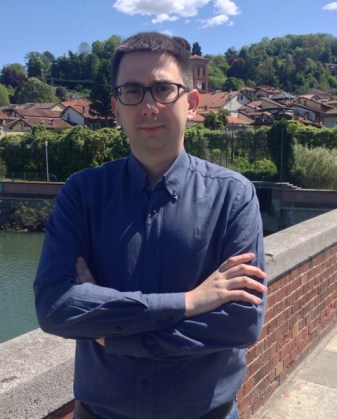
Dr Matteo Bonifacio, visiting Research Fellow in the Oxford Centre for Methodism and Church History for the spring semester 2019.
I completed my doctoral studies at the University of Turin in May 2018, and I am currently Research Fellow at the Luigi Einaudi Foundation (Turin), where I have been extending my researches into eighteenth-century Britain begun when I was an undergraduate.
My post-doctoral project is on modern British political thought. I am particularly concerned with a specific sort of political language widespread in the late eighteenth century, namely the language of the “rights of man”. As is well-known, the American Declaration of Independence in 1776 and the Déclaration des droits de l’homme et du citoyen in 1789 formally recognized these imprescriptible natural rights and marked a turning point in the history of human rights. In the Age of Revolutions those theoretical discussions about natural rights developed in the seventeenth century by seminal philosophers such as Hugo Grotius, Samuel Pufendorf and John Locke found their way into the political arena, epitomized by their codification in the two declarations.
Whilst scholarship is primarily focused on emphasising the emergence of that language in the French Lumières, I aim to investigate the circulation and usage of the rights of man language in late eighteenth-century Britain. I intend to place special attention on important figures such as Price, Priestley, Paine, and Wollstonecraft, but I am keen to browse primary sources in order to discover marginal authors who also took part in those debates. By adopting an historical perspective from below, I will intertwine plays, songs, novels, and the material history to set the rights of man debates in a broader context.
I am delighted to be a Visiting Research Fellow for the spring semester 2019 at the OCMCH, for it gives me the opportunity to discuss my research with leading historians of the long eighteenth century. The emergence of the rights of man in modern age is not infrequently studied from a secularized standpoint that leads to viewing them as one of the key-features of the so-called “radical Enlightenment”. I am going to inquire as to whether this perspective really does give us a complete understanding of the rights of man in the British context, where religious and political spheres were peculiarly intertwined.
 Westminster College Oxford - Research
Leave a comment