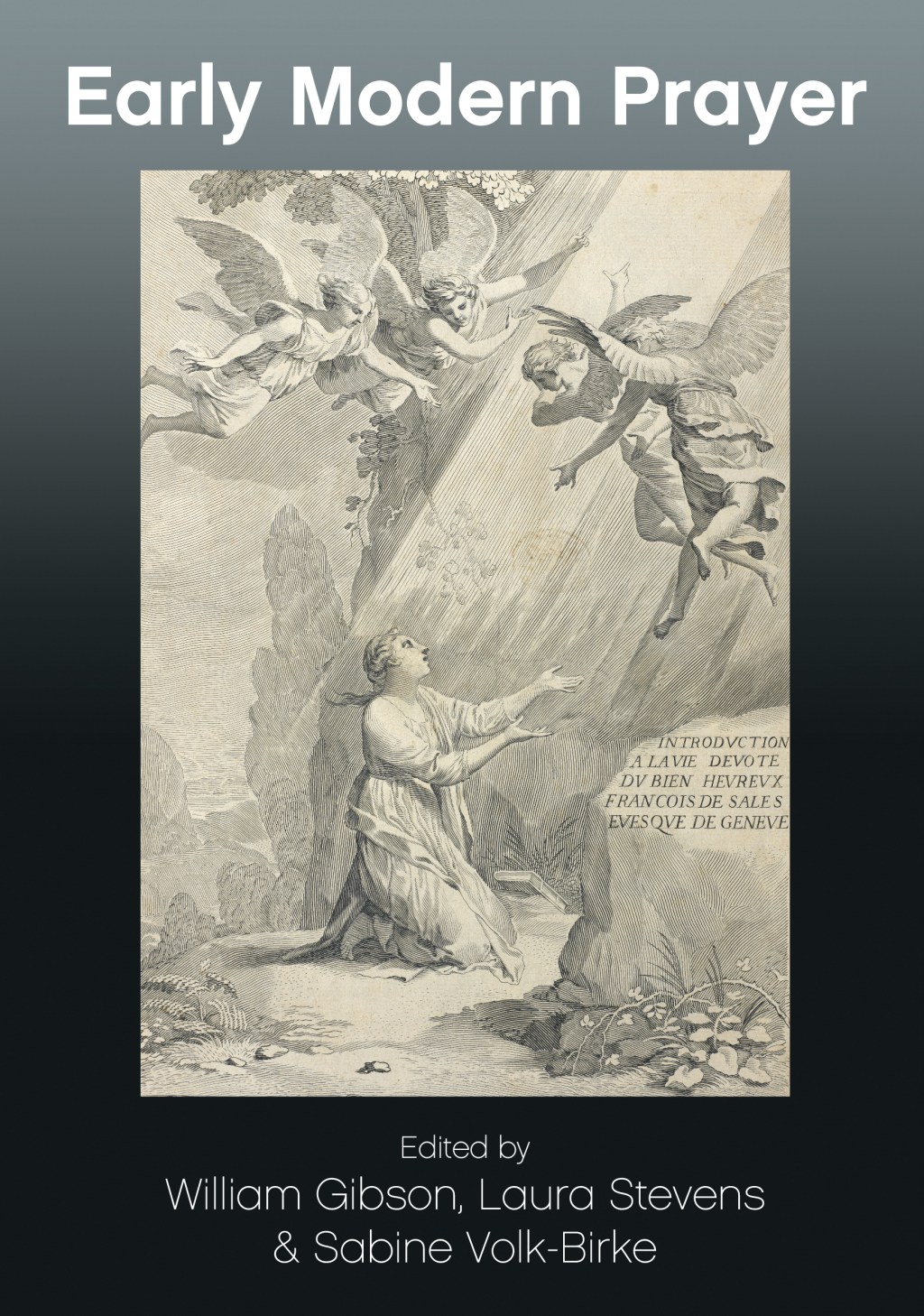

The latest issue of the Journal of Religious History, Literature and Culture, which is edited from the Centre, will be published in November and is a special themed issue on prayer in the Early Modern period.
The essays in this book aim to answer the following questions: What was the place of prayer in the early modern world? What did it look and sound like? Of what aesthetic and political structures did it partake, and how did prayer affect art, literature and politics? How did the activities, expressions and texts we might group under the term prayer serve to bind disparate peoples together, or, in turn, to create friction and fissures within communities? What roles did prayer play in intercultural contact, including violence, conquest and resistance? How can we use the prayers of those centuries (roughly 1500–1800) imprecisely termed the ‘early modern’ era to understand the peoples, polities and cultures of that time?
The essays included in the collection are:
Introduction by William Gibson, Laura M. Stevens and Sabine Volk-Birke.
Denise M. Kohn: ‘Rowlandson’s “Cover Story”: The Revision of Private Devotional Practice into Public Narrative.’
Elena Marasinova: ‘The Prayer of an Empress and the Eighteenth Century Russian Death Penalty Moratorium’
Linda Meditz: ‘The Captive at Prayer: Cross-Cultural Trauma as Revealed in the Diary of Stephen Williams’.
Penny Pritchard: ‘The Eye of a Needle: Commemorating the ‘Godly Merchant’ in the Early Modern Funeral Sermon.’
Laura M. Stevens: ‘Mary’s Magnificat in Eighteenth Century Britain’
Sabine Volk-Birke: ‘“The Order and Methods of Nosegays”: Imagining Readers in François de Sales’s Introduction à la vie dévote (1609) and its eighteenth century English adaptations.’
For information on the version of the special issue as a book see http://www.uwp.co.uk/book/early-modern-prayer-paperback/
 Westminster College Oxford - Research
Leave a comment