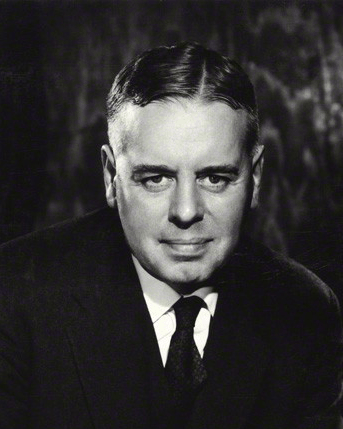
Dr Jane Platt, Visiting Research Fellow, writes on an aspect of her work cataloging papers related to the Anglican-Methodist Union talks.
Charles Kingsley Barrett, Professor of Divinity at Durham University from 1958 to 1982, was an internationally renowned biblical commentator whose most enduring works were on John, Paul and the Acts of the Apostles. He was also a Methodist minister, combining his work in academia with regular preaching in the small chapels of the Durham circuit until he was into his nineties. The son of a United Methodist minister, and named after the Christian-socialist, Charles Kingsley, he attended the former Bible-Christian school, Shebbear, in Devon, and it was these influences which guided his views on proposed Anglican-Methodist union during the 1950s and 60s. Having spoken out against union at the Methodist Conference in 1958, he was invited to join the ‘Conversations’ group, and when, with three others of like mind, he openly dissented from the ‘Conversations’ Interim Report, he was catapulted into the leadership of a growing wave of concern at all levels of Methodism. Though the majority of Methodists finally accepted the union scheme, it failed when put to the Church of England, though ways to achieve unity continue to be explored at parish and circuit level.
In the early 1990s Dr Peter Catterall began to research the failed union talks. His papers, collected from several different sources – Methodist and Anglican, pro and anti-union – are now housed at the Centre for Methodist and Church History at Oxford Brookes University, where they are listed as the Documents of the Anglican-Methodist Union Collection (DAMUC). The collection includes Catterall’s tape-recordings of conversations with some of the Anglicans and Methodists involved in the union talks.
During the course of Peter Catterall’s taped interview with Professor Barrett, made on 5 June 1991, Catterall was offered Barrett’s collected papers on the Anglican-Methodist union scheme. This included not only Barrett’s vast correspondence but also a collection of Barrett’s draft documents and the correspondence and minutes of the anti-union committee of which Barrett had been chairman: the National Liaison Committee. Barrett’s typescripts relate to the Conversations, ordination, episcopacy, the sacraments, the Service of Reconciliation, Protestantism, evangelicals, union attempts in countries outside England, and much more. In his letters and papers he combines warmth and kindness with a brilliant mind and a steely determination to uphold the Protestant beliefs he had held from boyhood. He was greatly liked and admired, even by those who disagreed with his views, as those scholars who wish to explore the DAMUC collection will discover for themselves.
Information for this post came from the DAMUC collection, The Times, 8 Sept. 2011, p. 58, and the Epworth Review, Vol. 20 no. 1 (1993), pp. 25-31.
 Westminster College Oxford - Research
Leave a comment